
Introduction
Walk into any bank or browse a financial website today, and you’ll quickly realize that choosing a credit card is no longer a simple decision.
Some cards promise generous cashback on everyday purchases. Others focus on travel rewards, airport lounge access, shopping discounts, fuel savings, premium lifestyle privileges, or exclusive business benefits. At first glance, many of them look attractive, making it difficult to understand which one actually suits your needs.
This often leads people to ask an important question:
“Which credit card should I choose?”
The answer isn’t about finding the most expensive card or the one with the biggest welcome bonus. The right credit card is the one that complements your spending habits, financial goals, and lifestyle.
A person who frequently shops online may benefit most from a cashback card. Someone who travels regularly may find greater value in travel rewards and airport lounge access. A business owner may require expense management features that are completely different from those of a student applying for a first credit card.
In other words, there is no single best credit card for everyone.
There is only the best type of credit card for you.
In our previous guide, Credit Cards and Their Functions, we explained how credit cards work, billing cycles, credit limits, interest charges, rewards, and responsible usage. If you’re new to credit cards, we recommend reading that guide first to build a strong foundation.
This article takes the next step.
Instead of explaining how a credit card works, we’ll explore the different types of credit cards available today, understand the purpose of each category, compare their advantages and limitations, and help you identify which one best matches your lifestyle.
Along the way, you’ll also discover practical examples, expert tips, common mistakes to avoid, and several lesser-known facts that many cardholders never learn until it’s too late.
By the end of this guide, you’ll have the confidence to choose the right category of credit card before comparing individual cards in our upcoming flagship comparison guide.
Choose Smart. Live Better.
Why Are There So Many Types of Credit Cards?
Have you ever wondered why banks issue dozens of different credit cards instead of offering just one?
The answer is surprisingly simple.
People don’t spend money in the same way.
Some individuals spend most of their monthly budget on groceries and online shopping. Others travel frequently for business or leisure. Many people spend a significant amount on fuel, while business owners may use credit cards primarily for managing company expenses. Students, salaried professionals, self-employed individuals, and frequent international travellers all have different financial needs.
A single credit card cannot provide the best value for every type of customer.
To solve this problem, banks and card issuers design specialised credit cards that reward specific spending patterns. Instead of offering the same benefits to everyone, they create different categories of cards tailored to different lifestyles.
For example:
- Cashback credit cards reward everyday purchases with cash savings.
- Travel credit cards focus on flights, hotels, and airport lounge access.
- Fuel credit cards help reduce fuel-related expenses.
- Shopping credit cards provide additional savings with selected retail partners.
- Premium credit cards offer exclusive lifestyle privileges and luxury experiences.
This specialised approach benefits both banks and customers. Banks can serve different customer segments more effectively, while cardholders receive benefits that align with their daily spending habits.
However, this wide variety can also create confusion.
Many people choose a credit card simply because it has an attractive advertisement, a welcome gift, or because a friend recommended it. Unfortunately, the most popular credit card isn’t always the most suitable one.
Understanding why different categories exist is the first step toward making a smarter financial decision
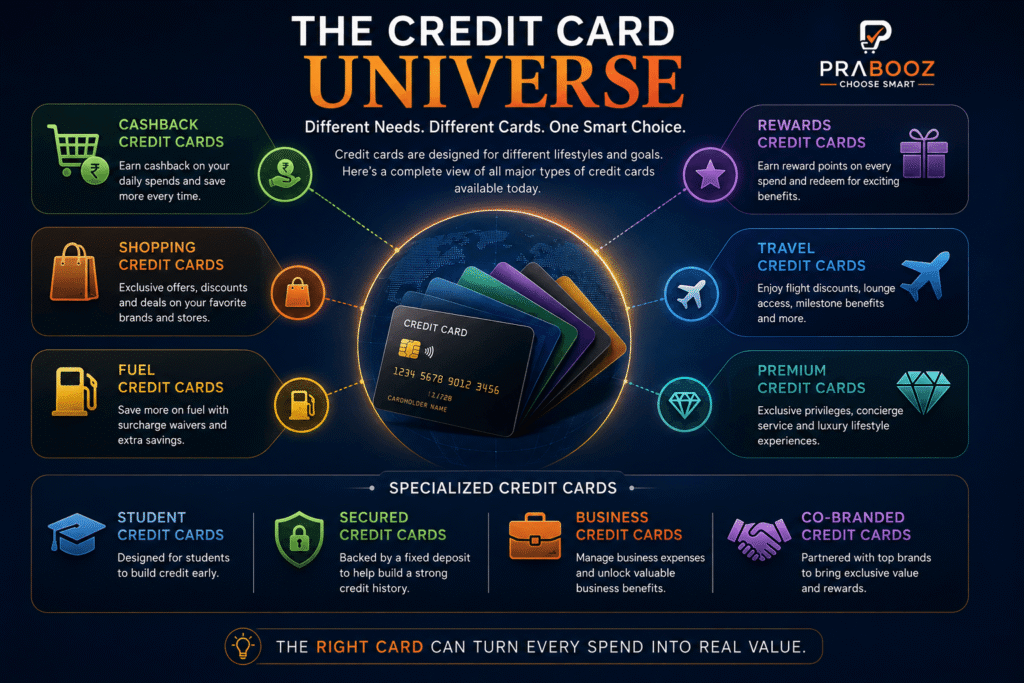
Major Types of Credit Cards at a Glance
| Credit Card Type | Best For |
|---|---|
| Cashback | Everyday spending |
| Rewards | Reward points |
| Shopping | Online shopping |
| Travel | Flights & hotels |
| Fuel | Fuel savings |
| Premium | Luxury lifestyle |
| Student | First-time users |
| Secured | Building credit history |
| Business | Business expenses |
| Co-branded | Brand-specific rewards |
💡 PRABOOZ INSIGHT
Don’t ask “Which credit card is the best?”
Instead, ask “Which credit card matches the way I spend my money?”
The answer to that question will usually help you choose a card that delivers greater long-term value than one selected purely because of promotions or advertisements.
How Banks Classify Credit Cards
Although thousands of credit cards are available worldwide, most of them can be grouped into a few major categories based on their primary purpose.
Banks don’t create new card categories randomly. Instead, they analyse customer spending behaviour and design products that deliver the greatest value for specific lifestyles.
Credit card issuers in India operate under regulatory guidelines issued by the Reserve Bank of India (RBI), which also provides consumer guidance on credit card issuance and usage.
For example, a person who spends heavily on online shopping may appreciate cashback or shopping-focused benefits. Someone who travels regularly may prefer travel rewards, complimentary airport lounge access, or travel-related protections. Likewise, business owners often require features that simplify expense management and improve cash flow.
This customer-focused approach helps banks offer more relevant benefits while allowing users to choose a card that matches their everyday financial habits.
The most common types of credit cards include:
- Cashback Credit Cards
- Rewards Credit Cards
- Shopping Credit Cards
- Travel Credit Cards
- Fuel Credit Cards
- Premium Credit Cards
- Student Credit Cards
- Secured Credit Cards
- Business Credit Cards
- Co-branded Credit Cards
Each category serves a different purpose, and no single category is universally better than another. The best choice always depends on how you plan to use your credit card.
In the following sections, we’ll examine each type in detail, compare their strengths and limitations, and help you identify which category best fits your lifestyle.
📌 Did You Know?
Some credit cards offer benefits that many cardholders never use, such as complimentary insurance, purchase protection, extended warranty, travel assistance, or emergency card services. However, these benefits vary depending on the issuer, card network, card variant, and specific terms and conditions.
We’ll explore these often-overlooked features in our upcoming guide:
Hidden Credit Card Benefits Most People Never Know About.
Cashback Credit Cards
Cashback credit cards are among the most popular choices because they offer a simple and direct benefit—you earn a percentage of your eligible spending back as cash or statement credit.
Unlike reward points that require redemption, cashback is straightforward. Every eligible purchase helps you save money, making these cards especially attractive for people who regularly spend on groceries, online shopping, dining, utility bills, and other everyday expenses.
For many users, cashback cards provide immediate value without the need to understand complicated reward programs or redemption rules.
If your monthly spending is focused on daily purchases rather than travel or luxury benefits, a cashback credit card can often deliver better overall savings than many premium cards.
What Is a Cashback Credit Card?
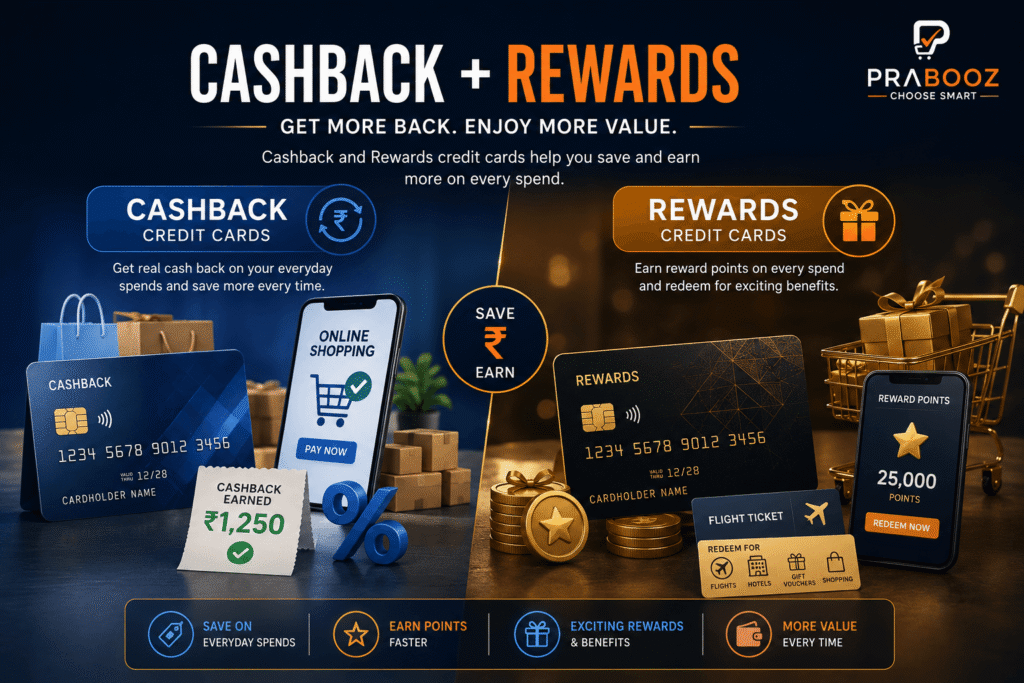
A cashback credit card returns a small percentage of your eligible spending as cashback. Depending on the issuer, the cashback may be credited directly to your account, adjusted against your monthly statement, or accumulated for redemption later.
For example, if your card offers 5% cashback on eligible online purchases and you spend ₹20,000, you could earn ₹1,000 back, subject to the card’s terms and cashback limits.
Although cashback percentages vary from one card to another, the concept remains the same—you receive a portion of your spending back, helping reduce your overall expenses.
Who Should Choose a Cashback Credit Card?
A cashback credit card is generally suitable for people who:
- Frequently shop online.
- Spend regularly on groceries and supermarkets.
- Pay utility bills using a credit card.
- Order food online or dine out often.
- Prefer straightforward savings instead of reward points.
- Want a card that provides value on everyday spending.
For these users, cashback can accumulate steadily throughout the year without requiring complex redemption strategies.
Major Benefits
- Direct savings on eligible purchases.
- Easy to understand and use.
- Excellent for everyday spending.
- Lower dependence on reward point redemption.
- Can reduce your effective annual spending when used responsibly.
Things to Consider
Not every purchase qualifies for cashback.
Many cashback cards include conditions such as:
- Category-specific cashback rates.
- Monthly cashback limits.
- Merchant exclusions.
- Minimum transaction values.
- Spending caps.
- Annual fee waiver conditions.
Reading the card’s benefit guide before applying helps you understand how the cashback program actually works.
Popular Examples
Some well-known cashback credit cards include:
- SBI Cashback Credit Card
- HDFC Millennia Credit Card
- Amazon Pay ICICI Bank Credit Card
- HSBC Live+ Credit Card
- Airtel Axis Bank Credit Card
Features, eligibility, and benefits may change over time. Always refer to the issuer’s official website before applying.
📊 Quick Comparison Table
| Feature | Cashback Credit Cards |
|---|---|
| Primary Benefit | Cashback on eligible spending |
| Best For | Online shoppers and everyday spending |
| Rewards Style | Direct cashback or statement credit |
| Easy to Understand | ✅ Yes |
| Suitable for Beginners | ✅ Yes |
| Annual Fee | Depends on the card |
💡 PRABOOZ INSIGHT
Many people compare cashback percentages without checking where the cashback applies.
A card offering 2% cashback on almost all purchases may provide more overall value than a card advertising 10% cashback on only a few selected merchants.
Always compare eligible categories, cashback limits, and annual fees instead of focusing only on the highest advertised percentage.
📌 Did You Know?
Some cashback cards automatically credit cashback to your monthly statement, while others require manual redemption through the bank’s rewards portal. Understanding how your cashback is credited can help you avoid missing out on earned rewards.
⚠️ Avoid This Mistake
Don’t spend extra money simply to earn cashback.
A 5% cashback offer is never a good deal if you’re buying something you don’t actually need. Responsible spending always saves more than chasing rewards.
Rewards Credit Cards
If you enjoy earning benefits on every purchase but prefer flexibility over direct cashback, a rewards credit card could be the right choice.
Unlike cashback cards that return a percentage of your spending as cash, rewards credit cards allow you to accumulate reward points whenever you make eligible purchases. These points can later be redeemed for shopping vouchers, gift cards, travel bookings, merchandise, bill payments, and in some cases even statement credits.
The biggest advantage of a rewards credit card is choice.
Instead of receiving the same type of reward every time, you decide how and when to use your accumulated points, depending on the redemption options offered by the card issuer.
For people who regularly use their credit card and understand how reward programs work, these cards can provide excellent long-term value.
What Is a Rewards Credit Card?
A rewards credit card allows you to earn reward points every time you make eligible purchases.
For example, a card may offer:
- 2 reward points for every ₹100 spent.
- Bonus points on selected categories.
- Welcome reward points after joining.
- Additional points during promotional campaigns.
The accumulated points can usually be redeemed through the bank’s rewards portal for various products and services.
Each issuer has its own reward structure, redemption value, and validity period, so it’s important to understand how the program works before applying.
Who Should Choose a Rewards Credit Card?
Rewards credit cards are generally suitable for people who:
- Use their credit card frequently.
- Prefer flexibility instead of direct cashback.
- Enjoy redeeming points for travel, shopping, or lifestyle benefits.
- Want access to promotional offers and bonus reward campaigns.
- Are comfortable managing reward points and redemption options.
These cards are especially useful for users whose spending spans multiple categories rather than concentrating on one area.
Major Benefits
- Earn reward points on eligible purchases.
- Multiple redemption options.
- Bonus rewards during special promotions.
- Suitable for diversified spending.
- Can provide excellent long-term value when points are redeemed wisely.
Things to Consider
Not all reward points have the same value.
Before choosing a rewards credit card, pay attention to:
- Reward earning rate.
- Redemption value.
- Expiry of reward points.
- Minimum redemption requirements.
- Eligible redemption categories.
- Annual fees and spending requirements.
Sometimes a card with fewer reward points may actually provide better value if its redemption rate is higher.
Popular Examples
Some well-known rewards credit cards include:
- HDFC Regalia Gold Credit Card
- SBI PRIME Credit Card
- Axis Bank SELECT Credit Card
- ICICI Bank Coral Credit Card
- IDFC FIRST Select Credit Card
Card features, reward programs, and redemption options may change over time. Always verify the latest details on the issuer’s official website before applying.
📊 Quick Comparison Table
| Feature | Rewards Credit Cards |
|---|---|
| Primary Benefit | Reward Points |
| Best For | Regular credit card users |
| Rewards Style | Redeemable reward points |
| Flexibility | ⭐⭐⭐⭐⭐ |
| Suitable for Beginners | ⭐⭐⭐⭐☆ |
| Annual Fee | Depends on the card |
💡 PRABOOZ INSIGHT
A rewards card is valuable only if you understand how much each reward point is actually worth.
For example, 1,000 reward points on one card may provide significantly more value than 2,000 points on another card because redemption values differ.
Always compare the value of the rewards, not just the number of points you earn.
📌 Did You Know?
SMany reward programs have an expiry date. If you don’t redeem your points within the specified period, they may expire and become unusable.
Checking your reward balance regularly helps ensure you don’t lose benefits you’ve already earned.
⚠️ Avoid This Mistake
Don’t choose a rewards credit card based only on a large welcome bonus.
A generous joining offer may look attractive, but the long-term value depends on how many points you earn through your normal spending and how easily you can redeem them.
Shopping Credit Cards
Online shopping has transformed the way people buy products. From groceries and electronics to fashion and home appliances, millions of purchases are now made through e-commerce platforms every day.
To encourage this growing trend, banks and retail brands have introduced shopping credit cards that offer additional savings on purchases made through selected merchants or partner platforms.
Unlike general cashback or rewards cards, shopping credit cards are designed to maximise benefits for people who frequently shop online or at specific retail stores.
If a large portion of your monthly spending goes towards online shopping, a shopping credit card can help you save significantly through instant discounts, accelerated rewards, cashback offers, and exclusive shopping privileges.

What Is a Shopping Credit Card?
A shopping credit card is a credit card specially designed to reward purchases made through selected online or offline retail partners.
These cards often provide:
- Higher cashback on partner merchants.
- Accelerated reward points.
- Instant discounts during sale events.
- EMI offers on eligible purchases.
- Exclusive shopping deals.
- Special merchant coupons.
Many shopping credit cards are issued in partnership with major retailers, making them particularly attractive to customers who frequently shop with those brands.
Who Should Choose a Shopping Credit Card?
Shopping credit cards are ideal for people who:
- Shop online regularly.
- Purchase groceries through digital platforms.
- Frequently buy electronics, fashion, or household products.
- Prefer discounts over travel benefits.
- Spend consistently with one or two favourite shopping platforms.
If your spending is concentrated on online purchases, these cards can provide greater value than general-purpose rewards cards.
Major Benefits
- Higher savings on partner merchants.
- Exclusive shopping offers.
- Instant discounts during major sale events.
- Additional cashback opportunities.
- EMI options on selected purchases.
- Faster reward accumulation for shopping categories.
Things to Consider
Shopping credit cards usually provide their highest value only on selected merchants.
Before applying, carefully check:
- Eligible shopping platforms.
- Cashback limits.
- Reward caps.
- Merchant restrictions.
- Annual fees.
- Offer validity periods.
- Redemption conditions.
A shopping card that performs exceptionally well on one platform may provide only standard rewards elsewhere.
Popular Examples
Some well-known shopping-focused credit cards include:
- Amazon Pay ICICI Bank Credit Card
- Flipkart Axis Bank Credit Card
- HDFC Tata Neu Credit Card
- Myntra Kotak Credit Card
- SBI SimplyCLICK Credit Card
Features and benefits vary by issuer and may change over time. Always verify the latest details on the official issuer’s website before applying.
📊 Quick Comparison Table
| Feature | Shopping Credit Cards |
|---|---|
| Primary Benefit | Shopping discounts & cashback |
| Best For | Frequent online shoppers |
| Rewards Style | Cashback, discounts & reward points |
| Partner Benefits | ⭐⭐⭐⭐⭐ |
| Suitable for Beginners | ⭐⭐⭐⭐☆ |
| Annual Fee | Depends on the card |
💡 PRABOOZ INSIGHT
Don’t choose a shopping credit card simply because it offers attractive discounts on a single website.
Instead, review where you actually spend most of your money throughout the year.
A card that offers slightly lower rewards across many merchants may provide greater long-term value than one that delivers excellent benefits on only one platform.
📌 Did You Know?
Many shopping credit cards provide exclusive offers during festive sale events such as limited-time instant discounts, no-cost EMI, bonus reward points, or partner-specific promotions. However, these offers usually have eligibility conditions and limited validity periods.
⚠️ Avoid This Mistake
Don’t assume every online purchase qualifies for maximum rewards.
Many shopping cards offer higher benefits only on selected partner merchants, while purchases made elsewhere may earn standard rewards.
Always read the merchant eligibility and reward terms before relying on advertised offers.
Quick Summary
Best For: Regular online shoppers and customers loyal to specific shopping platforms.
Biggest Advantage: Enhanced savings through merchant partnerships, discounts, cashback, and exclusive shopping offers.
Things to Remember: Compare partner merchants, annual fees, reward limits, and long-term value before choosing a shopping credit card.
Travel Credit Cards
For frequent travellers, a credit card can offer much more than just a convenient payment method.
Travel credit cards are designed to make every journey more rewarding by offering benefits such as airline rewards, hotel privileges, airport lounge access, travel discounts, and other travel-related services.
Whether you travel for business or leisure, these cards can help reduce travel expenses while making your journey more comfortable.
Instead of rewarding everyday shopping, travel credit cards focus on travel-related spending, allowing cardholders to earn valuable benefits every time they book flights, hotels, or holiday packages.
If travelling is a regular part of your lifestyle, a travel credit card may provide significantly greater value than a standard cashback or shopping card.
What Is a Travel Credit Card?
A travel credit card is specially designed for people who travel frequently.
Instead of primarily rewarding shopping or grocery spending, these cards offer benefits connected to travel, such as:
- Air miles
- Airport lounge access
- Hotel privileges
- Travel reward points
- Flight discounts
- Travel insurance on eligible cards
- Foreign spending benefits
- Priority travel services
Many travel cards allow reward points to be converted into airline miles or hotel loyalty points, making them particularly attractive to frequent travellers.
Who Should Choose a Travel Credit Card?
Travel credit cards are ideal for people who:
- Travel frequently for work.
- Take regular domestic or international holidays.
- Book flights and hotels online.
- Value airport lounge access.
- Prefer travel experiences over cashback.
- Want to earn airline or hotel rewards.
For occasional travellers, these cards may still provide useful benefits, but frequent travellers usually gain the greatest value.
Major Benefits
- Complimentary airport lounge access (on eligible cards).
- Travel reward points.
- Airline mile conversion.
- Hotel partnerships.
- Flight booking offers.
- Travel-related promotions.
- Better value for frequent travellers.
Things to Consider
Travel cards often include premium benefits, but they may also have:
- Higher annual fees.
- Minimum spending requirements.
- Limited lounge visits.
- Reward conversion rules.
- Airline or hotel partner restrictions.
- Foreign currency markup fees.
Understanding these conditions helps you determine whether the benefits justify the annual cost.
Popular Examples
Some well-known travel credit cards include:
- HDFC Regalia Gold Credit Card
- Axis Atlas Credit Card
- SBI Card ELITE
- American Express Platinum Travel Credit Card
- ICICI Bank Emeralde Credit Card
Benefits, fees, and travel privileges vary by card and issuer. Always verify the latest details on the issuer’s official website before applying.
📊 Quick Comparison Table
| Feature | Travel Credit Cards |
|---|---|
| Primary Benefit | Travel rewards & privileges |
| Best For | Frequent travellers |
| Rewards Style | Air miles, hotel rewards & travel points |
| Lounge Access | ⭐⭐⭐⭐⭐ |
| Suitable for International Travel | ⭐⭐⭐⭐⭐ |
| Annual Fee | Usually Medium to High |
🟦 Prabooz Insight
Many people choose a travel credit card simply because it advertises free airport lounge access.
However, lounge access alone should never be the deciding factor.
Compare the complete package, including reward earning rate, airline partners, hotel partnerships, annual fees, foreign transaction charges, and overall travel benefits before making your decision.
📌 Did You Know?
Some travel credit cards include additional travel-related benefits such as travel insurance, emergency assistance, baggage-related protection, or concierge services. These benefits vary depending on the issuer, card network, card variant, and the specific terms and conditions.
We’ll explain these often-overlooked features in our upcoming guide:
Hidden Credit Card Benefits Most People Never Know About.
⚠️ Avoid This Mistake
Don’t apply for a travel credit card if you only travel once or twice a year.
In many cases, a cashback or rewards credit card may provide better overall value for occasional travellers because of lower annual fees and more versatile rewards.
Quick Summary
Best For: Frequent travellers and people who regularly book flights and hotels.
Biggest Advantage: Travel-focused rewards, airport lounge access, airline partnerships, and premium travel benefits.
Things to Remember: Compare annual fees, lounge access limits, travel partners, foreign transaction charges, and reward redemption options before choosing a travel credit card.
Fuel Credit Cards
Fuel is a recurring monthly expense for millions of people. Whether you drive a personal vehicle, commute long distances, or operate a business that depends on transportation, fuel costs can add up significantly over time.
Fuel credit cards are designed to help reduce these expenses by offering benefits specifically related to fuel purchases. Instead of rewarding general shopping or travel, these cards focus on savings at fuel stations through surcharge waivers, reward points, cashback, and partner fuel station offers.
For people who spend a considerable amount on fuel every month, choosing the right fuel credit card can result in meaningful annual savings.
What Is a Fuel Credit Card?
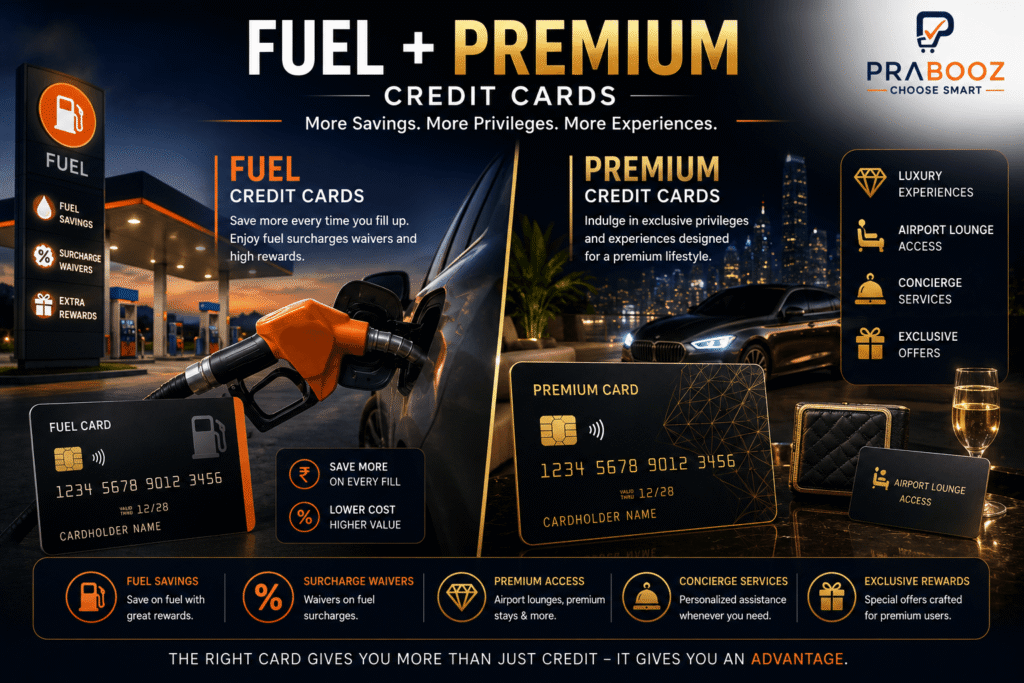
A fuel credit card is a specialised credit card designed to reward spending on fuel purchases.
Depending on the card and issuer, fuel-related benefits may include:
- Fuel surcharge waiver.
- Cashback on eligible fuel transactions.
- Reward points on fuel spending.
- Discounts at partner fuel stations.
- Accelerated rewards for fuel purchases.
Some cards also combine fuel benefits with rewards on groceries, utility payments, or other everyday spending, making them useful beyond the fuel station.
Who Should Choose a Fuel Credit Card?
Fuel credit cards are ideal for people who:
- Drive regularly.
- Have long daily commutes.
- Frequently travel by road.
- Own multiple vehicles.
- Operate small businesses that incur regular fuel expenses.
- Spend a significant amount on fuel every month.
If fuel is one of your largest recurring monthly expenses, a fuel credit card can help reduce your overall transportation costs.
Major Benefits
- Fuel surcharge waiver on eligible transactions.
- Cashback on fuel purchases (available on some cards).
- Additional reward points on fuel spending.
- Partner fuel station offers.
- Savings on recurring fuel expenses.
- Useful for both personal and business travel.
Things to Consider
Fuel benefits are often subject to specific conditions.
Before applying, check:
- Eligible fuel stations.
- Maximum monthly fuel benefits.
- Minimum and maximum transaction values.
- Fuel surcharge waiver limits.
- Cashback caps.
- Annual fees.
- Reward redemption rules.
A card offering excellent fuel benefits at one fuel network may provide only standard rewards elsewhere.
Popular Examples
Some well-known fuel-focused credit cards include:
- SBI BPCL Credit Card
- SBI BPCL OCTANE Credit Card
- IndianOil HDFC Bank Credit Card
- IndianOil Axis Bank Credit Card
- HPCL BoB ENERGIE Credit Card
Card features, partner fuel stations, and benefits may change over time. Always verify the latest details on the issuer’s official website before applying.
📊 Quick Comparison Table
| Feature | Fuel Credit Cards |
|---|---|
| Primary Benefit | Fuel savings |
| Best For | Regular vehicle owners and commuters |
| Rewards Style | Fuel surcharge waiver, cashback & reward points |
| Savings Potential | ⭐⭐⭐⭐⭐ |
| Suitable for Daily Drivers | ⭐⭐⭐⭐⭐ |
| Annual Fee | Depends on the card |
Prabooz Insight
HFuel credit cards often advertise fuel surcharge waivers, but many cardholders don’t realize these waivers usually apply only within specific transaction limits and at eligible fuel stations.
Always check the qualifying conditions before relying on advertised savings.
📌 Did You Know?
Some fuel credit cards earn reward points even on fuel purchases, while others provide only surcharge waivers or cashback. Understanding how your card calculates fuel benefits can help you maximise your savings over the course of a year.
⚠️ Avoid This Mistake
Don’t choose a fuel credit card if your monthly fuel spending is very low.
In many cases, a cashback or rewards credit card may provide greater overall value because it rewards a wider range of everyday purchases.
Quick Summary
Best For: People with regular fuel expenses and long daily commutes.
Biggest Advantage: Reduced fuel costs through surcharge waivers, cashback, and fuel rewards.
Things to Remember: Compare eligible fuel stations, benefit limits, annual fees, and transaction conditions before choosing a fuel credit card.
Premium Credit Cards
For some people, a credit card is more than just a payment tool—it is a gateway to exclusive privileges, luxury experiences, and premium lifestyle benefits.
Premium credit cards are designed for customers who have higher spending capacity and expect more than cashback or reward points. These cards often combine travel privileges, dining experiences, lifestyle offers, concierge services, and premium customer support into a single product.
Although premium cards usually come with higher annual fees, they can provide excellent value for people who actively use the benefits included with the card.
However, these cards are not suitable for everyone. Choosing a premium credit card only makes sense when the benefits outweigh the annual cost.
What Is a Premium Credit Card?
A premium credit card is a high-end card designed for customers seeking enhanced rewards and exclusive lifestyle benefits.
Depending on the issuer and card variant, premium cards may include:
- Complimentary airport lounge access
- Premium travel benefits
- Luxury hotel privileges
- Concierge services
- Dining offers
- Golf privileges
- Higher reward earning rates
- Lifestyle memberships
- Priority customer support
The exact benefits vary widely between issuers, making it important to compare features carefully before choosing one.
Who Should Choose a Premium Credit Card?
Premium credit cards are generally suitable for people who:
- Spend significantly using credit cards.
- Travel frequently.
- Prefer premium travel and lifestyle experiences.
- Frequently dine at restaurants or stay in hotels.
- Can comfortably justify the annual fee through regular use of the benefits.
These cards provide the greatest value when the included privileges are used consistently.
Major Benefits
- Premium travel privileges.
- Airport lounge access on eligible cards.
- Concierge services.
- Enhanced reward earning.
- Dining and lifestyle offers.
- Hotel and travel partnerships.
- Priority customer service.
Things to Consider
Premium benefits often come with important conditions.
Before applying, compare:
- Annual fee.
- Renewal fee.
- Spending requirements for fee waiver.
- Lounge visit limits.
- Reward redemption value.
- Travel partner network.
- Eligibility requirements.
A premium card that looks impressive may not deliver good value if you rarely use its premium features.
Popular Examples
Some well-known premium credit cards include:
- HDFC Infinia Credit Card
- HDFC Diners Club Black
- Axis Bank Reserve Credit Card
- ICICI Bank Emeralde Private Metal Credit Card
- American Express Platinum Card
- SBI Card AURUM
Features, eligibility criteria, and premium benefits may change over time. Always verify the latest information on the issuer’s official website before applying.
📊 Quick Comparison Table
| Feature | Premium Credit Cards |
|---|---|
| Primary Benefit | Luxury lifestyle & premium travel |
| Best For | High-spending customers |
| Rewards Style | Premium rewards & lifestyle privileges |
| Lounge Access | ⭐⭐⭐⭐⭐ |
| Lifestyle Benefits | ⭐⭐⭐⭐⭐ |
| Annual Fee | Usually High |
Prabooz Insight
Don’t judge a premium credit card by its annual fee alone.
Instead, estimate the value of the benefits you are likely to use each year. If the combined value of lounge access, travel rewards, dining offers, and other privileges exceeds the annual fee, the card may be worthwhile. Otherwise, a mid-range rewards or cashback card could provide better overall value.
📌 Did You Know?
Some premium credit cards include additional protections such as purchase protection, extended warranty, travel-related cover, concierge services, or other premium benefits. These features differ between issuers and card networks and often have eligibility conditions.
We’ll explain these in detail in our upcoming guide:
Hidden Credit Card Benefits Most People Never Know About.
⚠️ Avoid This Mistake
Don’t apply for a premium credit card simply because it looks prestigious.
If you rarely travel, don’t use airport lounges, or seldom take advantage of premium lifestyle benefits, you may end up paying a high annual fee for features you’ll never use.
Quick Summary
Best For: Frequent travellers and high-spending users who regularly use premium lifestyle benefits.
Biggest Advantage: Exclusive travel, dining, and lifestyle privileges combined with enhanced rewards.
Things to Remember: Compare annual fees, renewal conditions, lounge access, reward value, and actual usage before choosing a premium credit card.
Student Credit Cards
Starting your financial journey can feel overwhelming, especially when you’re applying for your first credit card.
Many students and young adults assume that credit cards are meant only for salaried professionals or experienced borrowers. In reality, some banks offer credit cards specifically designed for students and first-time users, helping them build responsible financial habits and establish a credit history.
Student credit cards usually come with lower credit limits and simpler features than premium cards. The primary goal is not luxury benefits but encouraging responsible spending and timely repayments.
When used wisely, a student credit card can become the first step toward building a healthy credit profile for future financial needs.
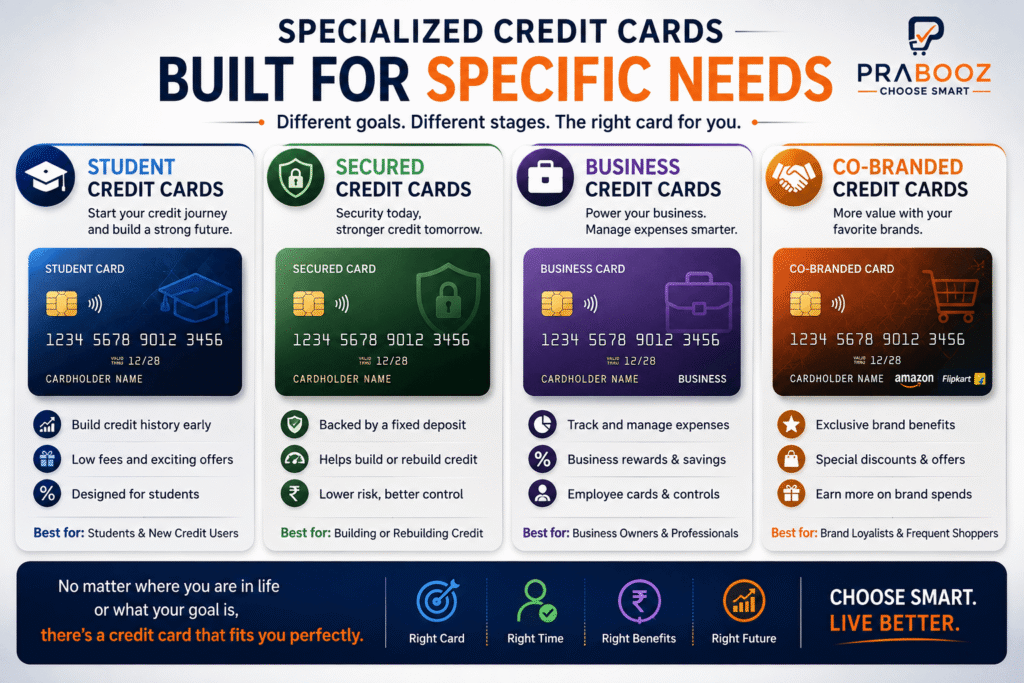
What Is a Student Credit Card?
A student credit card is a credit card designed for students or young adults who have little or no previous credit history.
Compared to standard credit cards, these cards generally offer:
- Lower credit limits.
- Easier eligibility requirements.
- Basic rewards or cashback.
- Educational spending benefits on some cards.
- Features that encourage responsible credit usage.
Some issuers may require a fixed deposit, a parent or guardian relationship, or other eligibility criteria depending on their policies.
Who Should Choose a Student Credit Card?
Student credit cards are suitable for:
- College and university students.
- First-time credit card applicants.
- Young adults beginning their financial journey.
- Individuals who want to build a credit history responsibly.
- Students who can manage repayments carefully.
These cards are intended for responsible use rather than high spending.
Major Benefits
- Helps build a credit history.
- Lower risk of overspending due to smaller credit limits.
- Easier approval compared to many premium cards.
- Convenient for online purchases and educational expenses.
- Encourages responsible financial habits.
Things to Consider
Although student credit cards are easier to obtain, they still require responsible usage.
Before applying, consider:
- Eligibility requirements.
- Credit limit.
- Annual fee.
- Interest rate.
- Late payment charges.
- Repayment responsibility.
A student credit card should never be treated as extra income. Spending should always remain within a planned budget.
Popular Examples
Some banks offer student-focused or entry-level credit card options, while others provide secured cards that can help students begin building credit.
Availability, eligibility, and product names vary by issuer and may change over time. Always check the issuer’s official website for the latest information.
📊 Quick Comparison Table
| Feature | Student Credit Cards |
|---|---|
| Primary Benefit | Building credit history |
| Best For | Students & first-time users |
| Credit Limit | Usually Lower |
| Ease of Approval | ⭐⭐⭐⭐⭐ |
| Rewards | Basic |
| Annual Fee | Usually Low or Nil |
🟦 Prabooz Insight
Prabooz Insight
The biggest benefit of a student credit card isn’t cashback or rewards.
It’s the opportunity to build a strong credit history by paying every bill on time. Good repayment habits established today can improve your chances of obtaining loans and premium credit cards in the future.
📌 Did You Know?
Your repayment history is one of the most important factors affecting your credit score. Paying your credit card bill on time every month demonstrates responsible financial behaviour and can positively influence your credit profile over time.
⚠️ Avoid This Mistake
Don’t apply for a credit card simply because your friends have one.
Apply only when you understand how billing cycles, due dates, and repayments work. Responsible usage is far more important than owning a credit card.
Quick Summary
Best For: Students and first-time credit card users.
Biggest Advantage: An opportunity to build a healthy credit history while learning responsible financial habits.
Things to Remember: Spend within your budget, pay your bills on time, and use the card as a financial tool—not as additional income.
Secured Credit Cards
Not everyone qualifies for a traditional credit card.
If you have little or no credit history, a low credit score, or difficulty meeting standard eligibility requirements, getting approved for a regular unsecured credit card may be challenging.
That’s where secured credit cards come in.
Unlike regular credit cards, secured credit cards require you to provide a security deposit—usually in the form of a fixed deposit (FD). The deposit acts as collateral and helps reduce the issuer’s risk.
Although you pledge your own money as security, a secured credit card functions much like a regular credit card. You can make purchases, repay your bills, and build a positive credit history through responsible use.
For many people, a secured credit card serves as an effective first step toward qualifying for better credit cards in the future.
What Is a Secured Credit Card?
A secured credit card is a credit card issued against a security deposit, most commonly a fixed deposit held with the issuing bank.
The credit limit is usually linked to the value of the deposit, although the exact limit depends on the issuer’s policies.
Since the bank has collateral, approval is generally easier than for unsecured credit cards.
Despite the security deposit, secured credit cards offer many of the same features as regular credit cards, including online payments, merchant acceptance, and the opportunity to build a credit history.
Who Should Choose a Secured Credit Card?
A secured credit card may be suitable for people who:
- Have no previous credit history.
- Want to build or rebuild their credit profile.
- Are unable to qualify for a regular credit card.
- Prefer a lower-risk way to learn responsible credit management.
- Already maintain a fixed deposit with a bank.
These cards are especially useful for first-time users who want to establish a positive repayment record.
Major Benefits
- Easier approval than many unsecured credit cards.
- Helps build a credit history.
- Can improve future eligibility for other financial products.
- Accepted at merchants like regular credit cards.
- Lower risk for the issuer because of the security deposit.
Things to Consider
Although approval is generally easier, secured credit cards have some important considerations:
- A security deposit is required.
- Your money remains blocked while the card is active.
- The credit limit is often linked to the deposit amount.
- Interest charges still apply if you don’t pay your bill on time.
- Annual fees may apply on some cards.
A secured credit card should be viewed as a credit-building tool rather than a way to borrow against your savings.
Popular Examples
Many major banks offer credit cards against fixed deposits or similar security arrangements.
The names, eligibility criteria, credit limits, and benefits vary by issuer, so always check the latest information on the official website before applying.
📊 Quick Comparison Table
| Feature | Secured Credit Cards |
|---|---|
| Primary Benefit | Credit building |
| Best For | First-time users & rebuilding credit |
| Security Deposit | Required |
| Ease of Approval | ⭐⭐⭐⭐⭐ |
| Credit Limit | Linked to deposit |
| Annual Fee | Depends on the card |
Prabooz Insight
A secured credit card is not a sign of poor financial health.
Many financially responsible people use secured cards simply to establish or strengthen their credit history before moving to higher-tier credit cards.
Think of it as a stepping stone rather than a permanent solution.
📌 Did You Know?
Responsible use of a secured credit card can help improve your credit profile over time. Once you build a strong repayment history, you may become eligible for regular unsecured credit cards with higher limits and additional benefits, subject to the issuer’s approval process.
⚠️ Avoid This Mistake
Don’t assume that a security deposit eliminates your repayment responsibility.
You are still required to pay your monthly credit card bill on time. Missing payments can lead to interest charges and may negatively affect your credit history.
Quick Summary
Best For: People with limited credit history or those looking to build or rebuild their credit profile.
Biggest Advantage: Easier approval while providing an opportunity to establish responsible credit behaviour.
Things to Remember: A security deposit doesn’t replace monthly repayments. Use the card responsibly and pay your bills on time.
Business Credit Cards
Running a business involves managing multiple expenses every month—from purchasing inventory and paying suppliers to booking travel and handling operational costs. Using a personal credit card for business transactions can quickly become confusing and difficult to manage.
Business credit cards are designed specifically to help entrepreneurs, self-employed professionals, startups, and companies manage their business spending more efficiently. These cards often provide higher credit limits, business-focused rewards, expense tracking tools, and other features that support day-to-day business operations.
Whether you operate a small business or a growing enterprise, a business credit card can help simplify expense management while improving cash flow when used responsibly.
What Is a Business Credit Card?
A business credit card is a credit card designed primarily for business-related expenses.
Unlike personal credit cards, these cards may include features that support business operations, such as:
- Higher credit limits.
- Business expense tracking.
- Employee add-on cards.
- Reward programs for business spending.
- Travel benefits for corporate users.
- Digital expense statements.
- Purchase management tools.
The exact features vary between issuers and card products.
Who Should Choose a Business Credit Card?
Business credit cards are generally suitable for:
- Business owners.
- Self-employed professionals.
- Freelancers.
- Startups.
- Small and medium-sized businesses.
- Companies that want to separate business expenses from personal spending.
Using a dedicated business card can make financial record-keeping much easier.
Major Benefits
- Better expense management.
- Separate personal and business spending.
- Employee add-on cards (where available).
- Business-focused reward programs.
- Higher credit limits on eligible cards.
- Useful spending reports and statements.
- Improved cash flow management when used responsibly.
Things to Consider
Before choosing a business credit card, compare:
- Annual fees.
- Credit limits.
- Business reward programs.
- Employee card facilities.
- Expense management features.
- Interest rates.
- Eligibility requirements.
A business credit card should support your business operations rather than encourage unnecessary borrowing.
Popular Examples
Some well-known business credit cards include:
- HDFC Business MoneyBack Credit Card
- SBI Card ELITE Business
- ICICI Bank Business Advantage Credit Card
- Axis Bank My Business Credit Card
Product availability, eligibility, and business benefits vary by issuer. Always check the latest information on the issuer’s official website before applying.
📊 Quick Comparison Table
| Feature | Business Credit Cards |
|---|---|
| Primary Benefit | Business expense management |
| Best For | Business owners & professionals |
| Credit Limit | Usually Higher |
| Employee Cards | Available on many cards |
| Expense Tracking | ⭐⭐⭐⭐⭐ |
| Annual Fee | Depends on the card |
Prabooz Insight
If you run a business, avoid mixing personal and business expenses on the same credit card.
Keeping them separate makes budgeting, accounting, and tax preparation much easier while giving you a clearer picture of your business spending.
⚠️ Avoid This Mistake
A business credit card is not free working capital.
Only spend what your business can comfortably repay. Carrying high-interest credit card debt for long periods can increase business costs and affect cash flow.
Quick Summary
Best For: Business owners, entrepreneurs, freelancers, and companies.
Biggest Advantage: Better business expense management, higher spending flexibility, and business-focused rewards.
Things to Remember: Compare annual fees, business features, reward programs, and repayment terms before choosing a business credit card.
Co-branded Credit Cards
Many of today’s most popular credit cards are created through partnerships between banks and well-known brands.
These are known as co-branded credit cards.
Instead of offering general rewards, these cards are designed to provide enhanced benefits when you shop with a specific partner brand or use its services. Depending on the partnership, you may receive higher cashback, accelerated reward points, exclusive discounts, complimentary memberships, or special promotional offers.
For customers who regularly purchase from a particular retailer or frequently use a specific service, a co-branded credit card can provide greater value than a standard credit card.
However, the biggest rewards are often limited to the partner brand, making it important to evaluate your spending habits before applying.
What Is a Co-branded Credit Card?
A co-branded credit card is issued jointly by a bank and a business partner such as an airline, retailer, fuel company, hotel chain, or e-commerce platform.
The bank manages the credit card and lending services, while the partner brand provides exclusive rewards and benefits related to its products or services.
Depending on the partnership, cardholders may receive:
- Higher cashback.
- Accelerated reward points.
- Exclusive discounts.
- Loyalty program benefits.
- Special shopping offers.
- Complimentary memberships.
- Early access to promotional campaigns.
Who Should Choose a Co-branded Credit Card?
Co-branded credit cards are suitable for people who:
- Frequently shop with one particular retailer.
- Regularly travel with the same airline.
- Stay with a preferred hotel group.
- Purchase fuel from the same fuel network.
- Use one digital platform for most of their spending.
The more frequently you use the partner brand, the greater the potential value of the card.
Major Benefits
- Higher rewards with partner brands.
- Exclusive merchant offers.
- Loyalty program integration.
- Additional promotional discounts.
- Faster reward accumulation on eligible purchases.
- Brand-specific privileges.
Things to Consider
Before applying, compare:
- Partner merchant coverage.
- Reward earning rules.
- Redemption options.
- Annual fees.
- Cashback limits.
- Reward expiry.
- Benefits on non-partner spending.
A co-branded card may provide exceptional value with one brand but only standard rewards elsewhere.
Popular Examples
Some well-known co-branded credit cards include:
- Amazon Pay ICICI Bank Credit Card
- Flipkart Axis Bank Credit Card
- Tata Neu HDFC Bank Credit Card
- BPCL SBI Card
- IndianOil Axis Bank Credit Card
- Club Vistara IDFC FIRST Credit Card
- Marriott Bonvoy HDFC Bank Credit Card
Benefits, partner programs, and eligibility criteria vary by issuer and may change over time. Always verify the latest information on the issuer’s official website before applying.
📊 Quick Comparison Table
| Feature | Co-branded Credit Cards |
|---|---|
| Primary Benefit | Brand-specific rewards |
| Best For | Loyal customers of partner brands |
| Rewards Style | Cashback, rewards & exclusive offers |
| Merchant Benefits | ⭐⭐⭐⭐⭐ |
| Flexibility | ⭐⭐⭐☆☆ |
| Annual Fee | Depends on the card |
Prabooz Insight
A co-branded credit card can deliver excellent value—but only if you regularly use the partner brand.
If your shopping habits change over time, the card may no longer be your best option. Review your spending patterns periodically to ensure the card still fits your lifestyle.
⚠️ Avoid This Mistake
Don’t apply for a co-branded credit card simply because it offers a generous welcome bonus.
Long-term value depends on how often you use the partner brand after the introductory offers have ended.
Quick Summary
Best For: Customers who regularly use a specific retailer, airline, hotel, fuel company, or digital platform.
Biggest Advantage: Enhanced rewards and exclusive benefits with partner brands.
Things to Remember: Compare long-term value, annual fees, partner coverage, and rewards on non-partner spending before choosing a co-branded credit card.
Modern Credit Card Features
Credit cards have evolved significantly over the past decade.
Today, many modern credit cards offer digital features that make payments faster, safer, and more convenient. These are not separate types of credit cards, but additional features that may be available with different card categories depending on the issuer.
Whether you use a cashback card, rewards card, or premium card, you may also benefit from these digital capabilities.
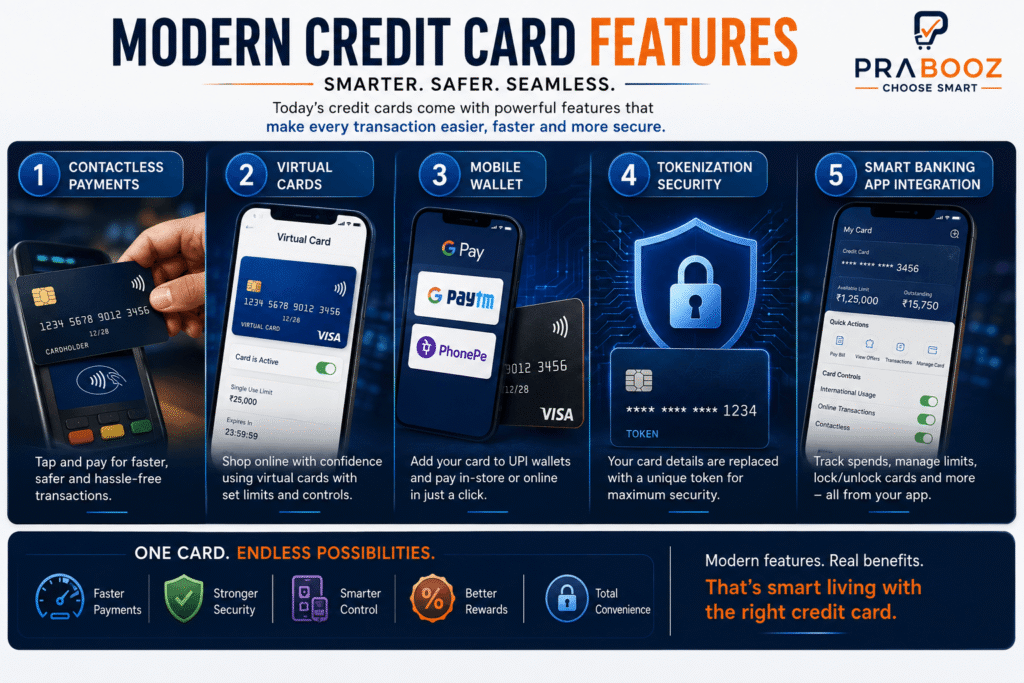
Virtual Credit Cards
Many issuers now allow customers to generate a virtual credit card for online transactions.
A virtual card usually has a temporary or separate card number linked to your existing credit card account. This can help reduce the risk of exposing your primary card details while shopping online.
Some virtual cards are designed for one-time use, while others remain valid for a limited period, depending on the issuer’s policies.
Contactless Payments
Most newly issued credit cards support contactless payment technology.
Instead of inserting the card into a payment terminal, you simply tap the card on a compatible machine to complete eligible transactions.
Contactless payments make everyday purchases faster while maintaining security standards established by the payment network and issuer.
Mobile Wallet Integration
Many credit cards can now be securely added to supported mobile wallets, allowing users to make payments using their smartphones or smartwatches instead of carrying a physical card.
Availability depends on the issuer, payment network, supported wallet, device, and country.
Tokenization
To improve payment security, many digital payment systems replace your actual card number with a unique digital token during transactions.
This process, known as tokenization, helps reduce the risk of sensitive card information being exposed during digital payments.
Card Management Through Mobile Apps
Most major card issuers now provide mobile applications that allow cardholders to:
- View transactions.
- Check available credit.
- Pay bills.
- Temporarily block or unblock cards.
- Set spending controls.
- Receive instant transaction alerts.
- Download account statements.
- Redeem rewards.
These features give users greater control over their credit cards and improve overall security.
📊 Quick Overview
| Feature | Purpose |
|---|---|
| Virtual Credit Card | Safer online transactions |
| Contactless Payments | Faster in-store payments |
| Mobile Wallet | Phone-based payments |
| Tokenization | Improved payment security |
| Mobile App | Better card management |
Prabooz Insight
Always enable transaction alerts in your banking app.
Real-time notifications help you detect unauthorized transactions quickly, allowing you to contact your card issuer immediately if you notice suspicious activity.
⚠️ Avoid This Mistake
Convenience should never replace security.
Even when using digital payment features, avoid sharing your OTP, PIN, CVV, passwords, or card details with anyone. Legitimate banks and card issuers will never ask for these confidential credentials over phone calls, messages, or emails.
Quick Summary
Best For: All credit card users.
Biggest Advantage: Faster payments, stronger security, and greater control over your credit card.
Things to Remember: Digital features improve convenience, but responsible usage and good security practices remain essential.
Which Credit Card Matches Your Lifestyle?
Choosing the right credit card isn’t about finding the card with the biggest rewards or the highest cashback percentage.
It’s about selecting a card that fits your lifestyle, spending habits, and financial goals.
Two people using the same credit card can have completely different experiences. One may save thousands every year, while the other may pay unnecessary annual fees without using the benefits.
The secret is simple:
Choose a credit card that rewards the way you already spend your money.
Before applying, ask yourself a few questions:
- Where do I spend most of my money?
- Do I travel frequently?
- Do I shop online regularly?
- Is fuel one of my largest monthly expenses?
- Am I applying for my first credit card?
- Do I own a business?
- Do I want simple cashback or flexible reward points?
Your answers will help you identify the category that best suits your needs.
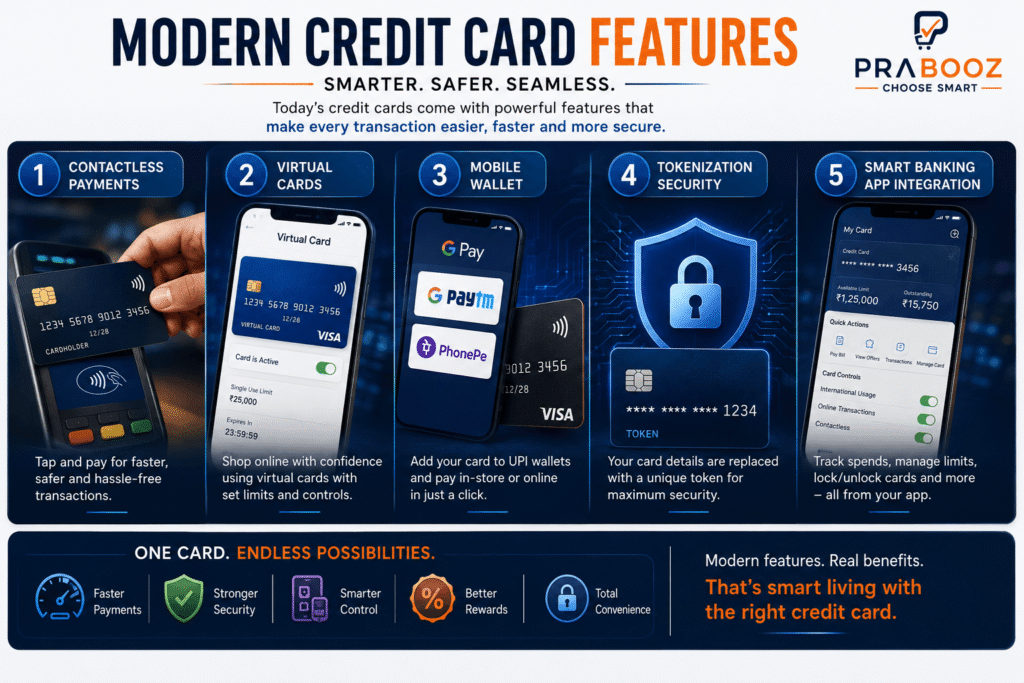
Lifestyle Matching Guide
| If You Are… | Best Credit Card Type | Why It May Be Suitable |
|---|---|---|
| A frequent online shopper | Cashback / Shopping | Earn savings on everyday online purchases. |
| Someone who spends across many categories | Rewards | Flexible reward points with multiple redemption options. |
| A frequent traveller | Travel | Travel rewards, airport lounge access, and travel privileges. |
| A regular driver | Fuel | Fuel surcharge waivers and fuel-related rewards. |
| A high spender seeking premium experiences | Premium | Luxury lifestyle benefits and enhanced rewards. |
| A college student or first-time user | Student | Easier to begin building responsible credit habits. |
| Someone with little or no credit history | Secured | Helps establish or rebuild your credit profile. |
| A business owner or freelancer | Business | Better expense management and business-focused features. |
| Loyal to a specific retailer or brand | Co-branded | Extra benefits with your preferred merchant or service. |
Remember: Your Lifestyle Can Change
The best credit card for you today may not be the best one five years from now.
For example:
- A student may later become a salaried professional.
- A cashback card user may begin travelling frequently.
- A business owner may require a higher credit limit and better expense management tools.
- Someone who rarely travelled may later value airport lounge access and travel rewards.
As your lifestyle changes, it’s a good idea to review whether your current credit card still matches your needs.
Choosing the right credit card is not a one-time decision—it should evolve with your financial journey.
Prabooz Insight
Choose the card that matches your spending—not the card everyone talks about.
The right card should save you money on expenses you already have.
📊 Quick Decision Checklist
Before applying for any credit card, make sure you can answer YES to these questions:
✅ I understand the annual fee.
✅ I know how the rewards work.
✅ I understand the repayment terms.
✅ I can pay my bill on time every month.
✅ The card matches my spending habits.
If you answered No to any of these questions, spend a little more time comparing cards before applying.
⚠️ Avoid This Mistake
Don’t choose a credit card because of:
- Advertisements.
- Celebrity endorsements.
- Attractive welcome gifts.
- Recommendations from friends.
- Social media trends.
Your financial habits are unique, so your credit card should be too.
Quick Summary
The best credit card isn’t the one with the most features.
It’s the one that provides the greatest value based on how you actually spend your money.
Choosing a card that matches your lifestyle will usually deliver better long-term benefits than chasing promotional offers or premium branding.
Complete Credit Card Comparison
After understanding the different types of credit cards, the next step is comparing them side by side.
Each category is designed for a different purpose. A cashback card may be ideal for everyday shopping, while a travel card provides better value for frequent travellers. Likewise, a business owner and a college student are unlikely to benefit from the same type of credit card.
The comparison below provides a quick overview of the major credit card categories discussed in this guide.
Remember, this comparison is intended to help you identify the right category. In our next flagship guide, we’ll compare individual credit cards from leading issuers in much greater detail.
📊 Complete Comparison Table
WordPress: Add a Table block here.
| Credit Card Type | Best For | Main Benefit | Typical Annual Fee | Things to Consider |
|---|---|---|---|---|
| Cashback | Everyday spending | Cashback on eligible purchases | Low to Medium | Cashback categories and spending limits |
| Rewards | Regular card users | Flexible reward points | Low to Medium | Redemption value and point expiry |
| Shopping | Frequent online shoppers | Merchant discounts and offers | Low to Medium | Partner merchant restrictions |
| Travel | Frequent travellers | Air miles and travel privileges | Medium to High | Lounge limits and travel partner network |
| Fuel | Regular drivers | Fuel savings and surcharge waivers | Low to Medium | Eligible fuel stations and benefit limits |
| Premium | High spenders | Luxury lifestyle and travel benefits | High | Annual fee and usage requirements |
| Student | First-time users | Credit building | Nil to Low | Lower credit limits and eligibility |
| Secured | Limited credit history | Easier approval | Usually Low | Security deposit required |
| Business | Entrepreneurs | Business expense management | Medium | Business eligibility and annual fee |
| Co-branded | Loyal brand users | Partner-specific rewards | Varies | Limited benefits outside partner brands |
Annual fees and benefits vary depending on the issuer and the specific credit card.
How to Read This Comparison
Rather than searching for the card with the highest rewards, focus on the category that best matches your everyday spending habits.
For example:
- If you shop online regularly, a cashback or shopping credit card may provide better long-term value.
- If you travel frequently, a travel credit card may offer more meaningful benefits.
- If fuel is one of your biggest monthly expenses, a fuel credit card could help reduce transportation costs.
- If you’re applying for your first credit card, a student or secured credit card may be the most suitable starting point.
Remember, choosing the right category is more important than choosing the most heavily advertised card.
Prabooz Insight
Many people compare credit cards based only on cashback percentages or welcome offers.
A smarter approach is to compare the overall value you receive throughout the year by considering:
- Annual fees
- Reward structure
- Redemption options
- Spending categories
- Additional benefits
- Eligibility requirements
- Your own spending habits
The right credit card is the one that saves you the most money—not necessarily the one with the biggest advertisement.
Many people compare credit cards based only on cashback percentages or welcome offers.
A smarter approach is to compare the overall value you receive throughout the year by considering:
- Annual fees
- Reward structure
- Redemption options
- Spending categories
- Additional benefits
- Eligibility requirements
- Your own spending habits
The right credit card is the one that saves you the most money—not necessarily the one with the biggest advertisement.
📋 Prabooz Smart Comparison Checklist
Before applying for any credit card, compare these important factors:
✅ Annual Fee
✅ Joining Benefits
✅ Reward Structure
✅ Cashback Categories
✅ Interest Rate
✅ Additional Benefits
✅ Eligibility Requirements
✅ Customer Service
✅ Mobile App Experience
✅ Security Features
⚠️ Avoid This Mistake
Never compare two credit cards using only one feature.
For example, a card with 10% cashback may actually provide less value than a 2% cashback card if the higher cashback applies only to limited merchants or has strict spending caps.
Always compare the complete package before making your decision.
Quick Summary
Every credit card category has its own strengths.
Instead of asking,
“Which credit card is the best?”
Ask,
“Which type of credit card best matches my lifestyle and spending habits?”
Once you’ve identified the right category, the next step is comparing the individual cards available within that category.
Common Mistakes to Avoid When Choosing a Credit Card
Choosing the right credit card isn’t just about finding attractive rewards or cashback offers. Many people end up paying unnecessary fees or missing valuable benefits because they overlook important details before applying.
Understanding these common mistakes can help you make a more informed decision and avoid problems that may affect your finances in the future.
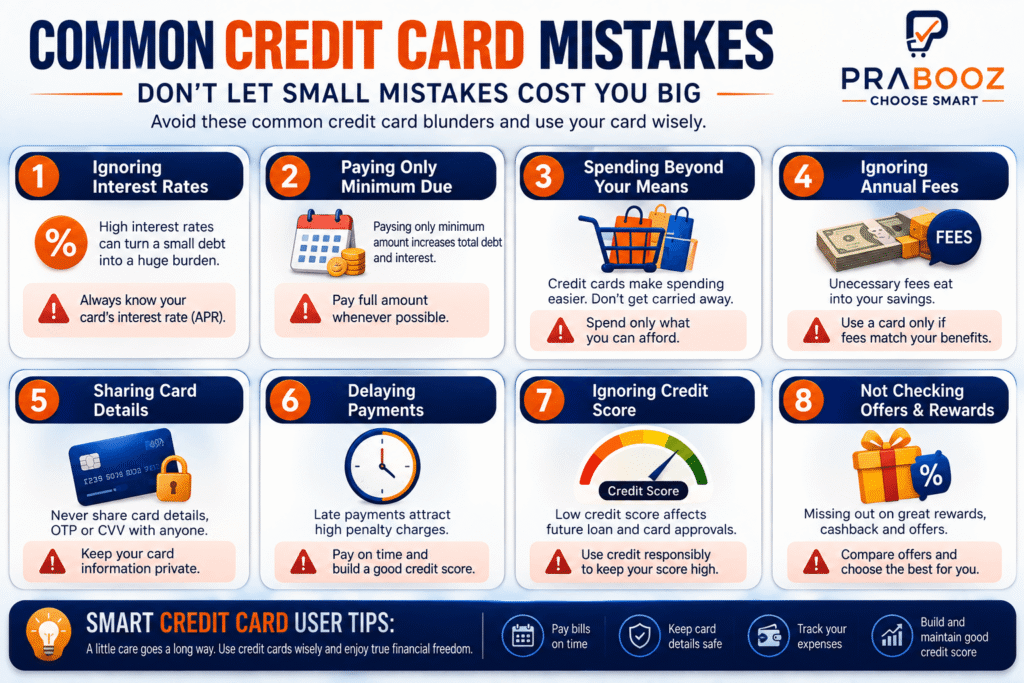
1.Choosing a Card Based Only on Advertisements
Promotional advertisements often highlight the most attractive features, such as cashback percentages, welcome bonuses, or premium lifestyle benefits.
However, they may not emphasize annual fees, spending conditions, reward limitations, or eligibility requirements.
Always compare the complete feature set before making your decision.
2. Ignoring the Annual Fee
Some credit cards offer outstanding benefits but also charge significant annual fees.
Before applying, ask yourself:
Will I actually use enough benefits to justify paying this fee every year?
If the answer is no, a lower-fee or no-fee card may provide better overall value.
3. Selecting the Wrong Card for Your Lifestyle
A travel credit card may be excellent for frequent flyers but offer little value to someone who rarely travels.
Similarly, a fuel credit card may not be worthwhile if fuel is only a small part of your monthly spending.
Always choose a card that rewards the way you naturally spend your money.
4. Applying for Multiple Credit Cards at the Same Time
Submitting several credit card applications within a short period may affect your credit profile and reduce your chances of approval.
Instead, research carefully and apply only for the card that best suits your needs.
5. Overlooking Interest Rates
Many people focus only on rewards and cashback while ignoring interest charges.
If you don’t pay your outstanding balance in full by the due date, interest charges can quickly outweigh the value of any rewards you earn.
Responsible repayment is always more important than earning rewards.
6. Not Reading the Terms and Conditions
Important information such as:
- Reward expiry
- Cashback limits
- Merchant exclusions
- Lounge visit restrictions
- Fee waiver conditions
- Insurance eligibility (where applicable)
is usually explained in the card’s terms and conditions.
Taking a few minutes to read these details can help prevent disappointment later.
7. Ignoring Customer Service and Mobile App Quality
A credit card is something you’ll use regularly.
Good customer support, a reliable mobile app, instant transaction alerts, and easy bill payments can significantly improve your overall experience.
These practical features are often just as important as rewards and cashback.
📋 Prabooz Smart Checklist
Before applying for any credit card, ask yourself:
☐ Does this card match my spending habits?
☐ Can I comfortably pay the annual fee?
☐ Do I understand the reward program?
☐ Am I able to pay the full bill every month?
☐ Have I compared similar cards?
☐ Have I read the important terms and conditions?
☐ Will I actually use the benefits offered?
If you answered “No” to any of these questions, spend a little more time comparing your options before applying.
Prabooz Insight
The best credit card isn’t the one with the most features.
It’s the one that helps you save money without encouraging unnecessary spending or creating debt.
Choose wisely, spend responsibly, and always pay your bill on time.
⚠️ Avoid This Mistake
Never apply for a credit card simply because someone else recommended it.
Your income, spending habits, financial goals, and lifestyle are different from everyone else’s.
A card that’s perfect for one person may be completely unsuitable for another.
Quick Summary
Most credit card problems don’t happen because people choose a bad card.
They happen because people choose the wrong card for their own needs or fail to understand how the card works.
Taking time to compare features, understand the terms, and match the card to your lifestyle can help you enjoy the benefits while avoiding unnecessary costs.
Frequently Asked Questions (FAQs)
1. What are the main types of credit cards?
The most common categories include cashback, rewards, shopping, travel, fuel, premium, student, secured, business, and co-branded credit cards. Each type is designed to suit different spending habits and financial needs.
2. Which type of credit card is best for beginners?
For many first-time users, student credit cards or secured credit cards can be a good starting point because they are designed to help build responsible credit habits. However, the best choice depends on your eligibility and financial situation.
3. What is the difference between a cashback card and a rewards card?
A cashback credit card returns a percentage of eligible spending as cashback or statement credit. A rewards credit card earns reward points that can usually be redeemed for shopping, travel, gift vouchers, or other benefits.
4. Are premium credit cards worth the annual fee?
Premium credit cards can provide excellent value if you regularly use benefits such as airport lounge access, travel rewards, dining offers, and concierge services. If you rarely use these features, a lower-fee card may be a better choice.
5. Which credit card is best for online shopping?
Shopping credit cards and cashback credit cards are generally popular choices for frequent online shoppers because they often provide additional rewards, discounts, or cashback on eligible purchases.
6. Can I own more than one credit card?
Yes. Many people use more than one credit card for different purposes. For example, one card may be used for everyday spending while another is used for travel or business expenses. However, multiple cards should be managed responsibly.
7. Do all credit cards charge an annual fee?
No. Some credit cards have no annual fee, while others charge annual or renewal fees depending on the benefits they offer. Always review the fee structure before applying.
8. What should I compare before choosing a credit card?
Compare important factors such as annual fees, reward structure, cashback categories, interest rates, eligibility requirements, additional benefits, and how well the card matches your spending habits.
9. Can changing my lifestyle affect which credit card is best for me?
Yes. Your financial needs may change over time. A student may later prefer a rewards card, while someone who begins travelling frequently may benefit more from a travel credit card. It’s a good idea to review your credit card periodically.
10. What is the most important factor when choosing a credit card?
The most important factor is choosing a credit card that matches your own spending habits and financial goals. The best credit card is not necessarily the one with the most benefits—it’s the one that provides the greatest value for the way you use it.
Final Thoughts
Choosing a credit card is one of the most important financial decisions many people make, yet it’s often influenced by advertisements, welcome offers, or recommendations from others.
As we’ve explored throughout this guide, there is no single credit card that’s perfect for everyone. Each category is designed with a different purpose in mind, and the best choice depends on your own lifestyle, spending habits, and financial goals.
Whether you prefer earning cashback on everyday purchases, collecting reward points, saving on fuel, enjoying travel privileges, or managing business expenses, selecting the right category is the first step toward making your credit card work for you—not against you.
Remember, a credit card is not extra income. It is a financial tool that rewards responsible spending and disciplined repayment. Used wisely, it can help you save money, build a healthy credit history, and enjoy valuable benefits. Used carelessly, it can become an expensive source of debt.
Before applying for any credit card, take a few minutes to compare annual fees, rewards, eligibility requirements, and the overall value the card offers for your personal spending habits. A thoughtful decision today can provide financial benefits for years to come.
At Prabooz, our goal isn’t to tell you which card to choose. Our goal is to help you understand your options so you can make an informed decision with confidence.
Because smarter decisions today create better financial outcomes tomorrow.
Choose Smart. Live Better.
📖 Continue Your Credit Card Journey
Now that you’ve identified the type of credit card that best matches your lifestyle, the next step is comparing the actual cards available in the market.
Coming Next
Best Credit Cards (2026): Detailed Comparison Guide
Choosing the right category is only the beginning. The next step is finding the best credit card within that category.
In our next flagship guide, we’ll compare credit cards from many of the leading issuers, including:
- HDFC Bank
- SBI Card
- ICICI Bank
- Axis Bank
- IDFC FIRST Bank
- Kotak Mahindra Bank
- HSBC
- Standard Chartered
- IndusInd Bank
- AU Small Finance Bank
- YES BANK
- RBL Bank
- American Express
- Bank of Baroda
- Federal Bank
- Canara Bank
- Union Bank of India
- Punjab National Bank
- Indian Bank
- South Indian Bank
We’ll compare them category by category, including:
- Cashback Credit Cards
- Rewards Credit Cards
- Shopping Credit Cards
- Travel Credit Cards
- Fuel Credit Cards
- Premium Credit Cards
- Business Credit Cards
- Student & Entry-Level Credit Cards
Each comparison will cover:
- Annual & Renewal Fees
- Eligibility Criteria
- Welcome Benefits
- Cashback & Reward Structure
- Airport Lounge Access
- Travel & Lifestyle Benefits
- Fuel Benefits
- Insurance & Protection Benefits (where applicable)
- Mobile App Experience
- Customer Service
- Prabooz Suitability Score
- Pros & Cons
- Our Editorial Recommendation
Whether you’re looking for your first credit card or planning to upgrade to a premium card, this guide will help you compare leading options side by side and choose the one that delivers the greatest value for your lifestyle.
Can’t find your preferred bank?
Don’t worry. Our comparison guide will continue to expand as new cards are launched and existing products are updated.
💡 Also Coming Soon
Hidden Credit Card Benefits, Fine Print & Costly Mistakes
Many credit card users focus only on rewards and cashback while overlooking other important features and conditions.
In this upcoming guide, we’ll explore:
- Often-overlooked credit card benefits
- Important terms and conditions
- Common misconceptions
- Costly mistakes that many cardholders make
- Practical tips to help you get the most value from your credit card
Knowing these details could help you make smarter decisions and avoid unpleasant surprises in the future.
Related Articles
- What Is Online Finance?
- Credit Cards and Their Functions: Everything You Need to Know
- Best Credit Cards (2026): Detailed Comparison Guide (Coming Soon)
- Hidden Credit Card Benefits, Fine Print & Costly Mistakes (Coming Soon)