
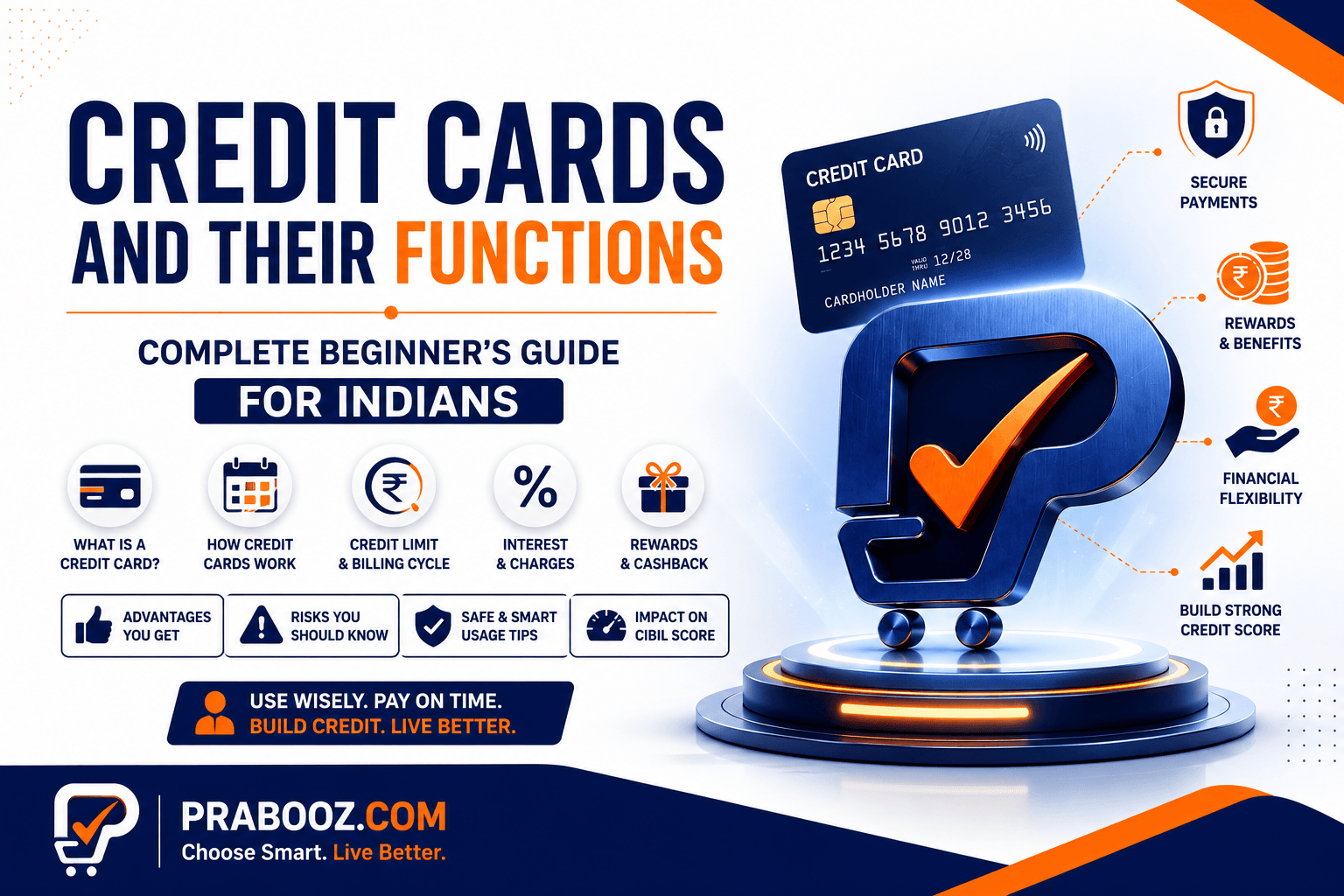
Credit cards have become an essential financial tool in today’s digital world. Whether you’re shopping online, booking travel tickets, paying utility bills, or building your credit history, a credit card can make transactions more convenient and rewarding.
However, many people use credit cards without fully understanding how they work. This often leads to unnecessary debt, high interest charges, and financial stress.
In this guide, we’ll explain the credit card basics every beginner should know, including how credit cards work, credit limits, billing cycles, rewards, risks, and smart usage tips.
At Prabooz, we believe financial knowledge helps you make better decisions.
Choose Smart. Live Better.
What Is a Credit Card?
A credit card is a payment card issued by a bank or financial institution that allows you to borrow money up to a predetermined limit to make purchases or payments.
Unlike a debit card, which uses money directly from your bank account, a credit card lets you spend first and pay later.
When you use your credit card, the bank temporarily pays the merchant on your behalf. You then repay the bank according to your billing cycle.
In simple terms: A credit card is a short-term loan that you can use repeatedly within your approved limit.
How Credit Cards Work
Step 1: Make a Purchase
Step 2: Bank Pays the Merchant
Step 3: Transaction Is Recorded
Step 4: Monthly Statement Is Generated
Step 5: Repayment
Understanding how credit cards work is the first step toward using them responsibly.

What Is a Credit Limit?
(Use the A credit limit is the maximum amount you can spend using your credit card.)
For example:
If your credit limit is ₹1,00,000, your total outstanding balance cannot exceed that amount.
Your credit limit is determined by factors such as:
Repayment behavior
Income
Employment status
Credit history
Existing loans
Repayment behavior
Why Credit Limits Matter
Using too much of your available limit can negatively affect your credit score.
Financial experts generally recommend keeping usage below 30% of your total limit whenever possible.
Example:
Credit Limit: ₹1,00,000
Recommended Usage: Below ₹30,000
Lower utilization often indicates responsible credit management.
Understanding the Billing Cycle
A billing cycle is the period during which your credit card transactions are recorded.
Most billing cycles last around 30 days.
Example:
Billing Period: 1st July to 30th July
Statement Date: 31st July
Payment Due Date: 20th August
All purchases made during the billing period appear on the statement.
If you pay the entire outstanding balance before the due date, you can enjoy an interest-free period on most purchases.
This interest-free period is one of the biggest advantages of using a credit card responsibly.
What Are Interest Charges?
A billing cycle is the period during which your credit card transactions are recorded.
Most billing cycles last around 30 days.
Example:
Billing Period: 1st July to 30th July
Statement Date: 31st July
Payment Due Date: 20th August
All purchases made during the billing period appear on the statement.
If you pay the entire outstanding balance before the due date, you can enjoy an interest-free period on most purchases.
This interest-free period is one of the biggest advantages of using a credit card responsibly.
Rewards, Cashback, and Benefits
Rewards, Cashback, and Benefits
One reason many people prefer credit cards is the rewards they offer.
Depending on the card, you may receive:
Cashback
A percentage of your spending is returned as cash rewards.
Example:
Spend ₹10,000
Cashback Rate: 5%
Cashback Earned: ₹500
Reward Points
Earn points for every purchase and redeem them for:
- Shopping vouchers
- Travel bookings
- Gift cards
- Merchandise
Travel Benefits
Some cards provide:
- Airport lounge access
- Air miles
- Hotel discounts
- Travel insurance
Special Discounts
Many credit cards offer:
- Dining discounts
- Fuel benefits
- Online shopping offers
- Entertainment rewards
The best rewards are valuable only when you pay your bills on time.
Credit Card Rewards & Risks — Quick Comparison
| 🟦 Rewards & Benefits | 🟧 Potential Risks |
|---|---|
| Cashback Offers — Earn a percentage of your spending back as cash rewards. | Overspending — Easy access to credit can lead to unnecessary purchases. |
| Reward Points — Redeem points for travel, shopping, or gift vouchers. | High Interest Rates — Carrying balances can become expensive. |
| Travel Benefits — Enjoy lounge access, air miles, and hotel discounts. | Debt Accumulation — Paying only minimum dues may lead to long‑term debt. |
| Special Discounts — Save on dining, fuel, and entertainment. | Late Payment Fees — Missing due dates can result in penalties. |
| Credit Score Building — Responsible usage improves your credit history. | Credit Score Damage — Late payments and high utilization can lower your score. |
Quick Tip: Credit cards offer valuable rewards only when bills are paid on time.
Advantages of Using Credit Cards
When used responsibly, credit cards offer several benefits.
Emergency Support
Convenience
Interest-Free Credit
Rewards and Cashback
Better Security
Credit Score Building
Risks of Credit Cards
While credit cards can be powerful financial tools, they also carry risks.
- Overspending
- High Interest Rates
- Debt Accumulation
- Late Payment Fees
- Credit Score Damage
Understanding these risks is an important part of mastering credit card basics.
Responsible Credit Card Usage Tips
A credit card should be used as a financial tool, not as extra income.
Follow these simple rules:
- Pay the Full Balance
- Spend Within Your Budget
- Track Your Transactions
- Avoid Unnecessary Debt
- Set Payment Reminders
- Protect Your Card Information
Small habits can make a big difference in maintaining financial health.
Smart Credit Card Habits — Quick Reference
| 🟦 Smart Usage Tips | 🟧 Common Mistakes to Avoid |
|---|---|
| Pay on Time — Always clear dues before the due date to avoid interest and penalties. | Ignoring Due Dates — Late payments hurt your credit score and add fees. |
| Track Spending — Use mobile apps or statements to monitor expenses regularly. | Overspending — Treat credit as convenience, not extra income. |
| Use Rewards Wisely — Redeem points for meaningful purchases or travel. | Chasing Offers — Don’t buy unnecessary items just for cashback. |
| Keep Utilization Low — Use less than 30% of your credit limit for a healthy score. | Maxing Out Cards — High utilization signals risk to lenders. |
| Review Statements — Check for errors or fraudulent transactions monthly. | Ignoring Statements — Missed errors can lead to long‑term issues. |
How to Choose the Right Credit Card?
Not every credit card is suitable for everyone.
Before applying, consider:
- Annual fees
- Cashback rates
- Reward programs
- Interest rates
- Travel benefits
- Fuel benefits
- Welcome bonuses
- Eligibility requirements
Choose a card that matches your spending habits rather than chasing promotional offers.
Final Thoughts
A credit card is much more than a payment method. When used wisely, it can help you build credit, earn rewards, improve financial flexibility, and manage expenses more efficiently.
However, the key to success is understanding the fundamentals and using credit responsibly.
Mastering these credit card basics can help you avoid common mistakes and maximize the benefits that credit cards offer.
For official consumer guidance, visit the Reserve Bank of India
You can also explore our Smart Ways to Find the Best Online Deals article to learn practical money-saving strategies while shopping online.
At Prabooz.com, we simplify financial concepts so you can make smarter money decisions with confidence.
Choose Smart. Live Better.
Want to understand how secured cards compare with other credit card types? Read our Types of Credit Cards: Which One Is Right for You? (2026 Complete Guide) to explore the different options and find one that may suit your needs.