

Introduction
Open with a relatable story.
Imagine buying a pair of wireless earbuds for ₹2,999. A few hours later, you discover the same product selling for ₹2,299 on another trusted website—with an additional bank offer that brings the price below ₹2,000. That small difference could have paid for your next meal or covered a month of your favourite streaming service.
This happens every day because prices change constantly across online stores. Smart shoppers don’t buy from the first website they visit—they compare prices, check offers, and make informed decisions. In this guide, you’ll learn simple yet powerful ways to compare prices before making any online purchase.
The smartest way to avoid overpaying is to compare prices before buying online instead of purchasing from the first website you visit.
- Introduction
- A Smart Shopper's Price Comparison Process
- Why Following a Process Matters
- Why This Process Works
- Why the Same Product Has Different Prices
- Why Comparing Prices Can Save Thousands Every Year
- What Should You Compare Besides Price?
- Best Ways to Compare Prices Online
- Useful Price Comparison Tools
- Products You Should Always Compare Before Buying
- How Long Should You Wait Before Buying?
- Beware of These Common Shopping Mistakes
- Best Time to Buy Online
- Real-Life Example: Comparing Smartphone Prices
- Quick Checklist Before Every Purchase
- Frequently Asked Questions (FAQs)
- 1. Is Google Shopping reliable?
- 2. Which website usually has the lowest prices?
- 3. Are cashback offers worth it?
- 4. Should I always wait for seasonal sales?
- 5. How can I check a product's price history?
- 6. Is the lowest-priced product always the best choice?
- 7. Do bank offers and coupons work together?
- 8. How many websites should I compare before buying?
- 9. Is it safe to buy from unknown sellers offering huge discounts?
- 10. What is the most important tip for saving money while shopping online?
- Final Thoughts
A Smart Shopper’s Price Comparison Process
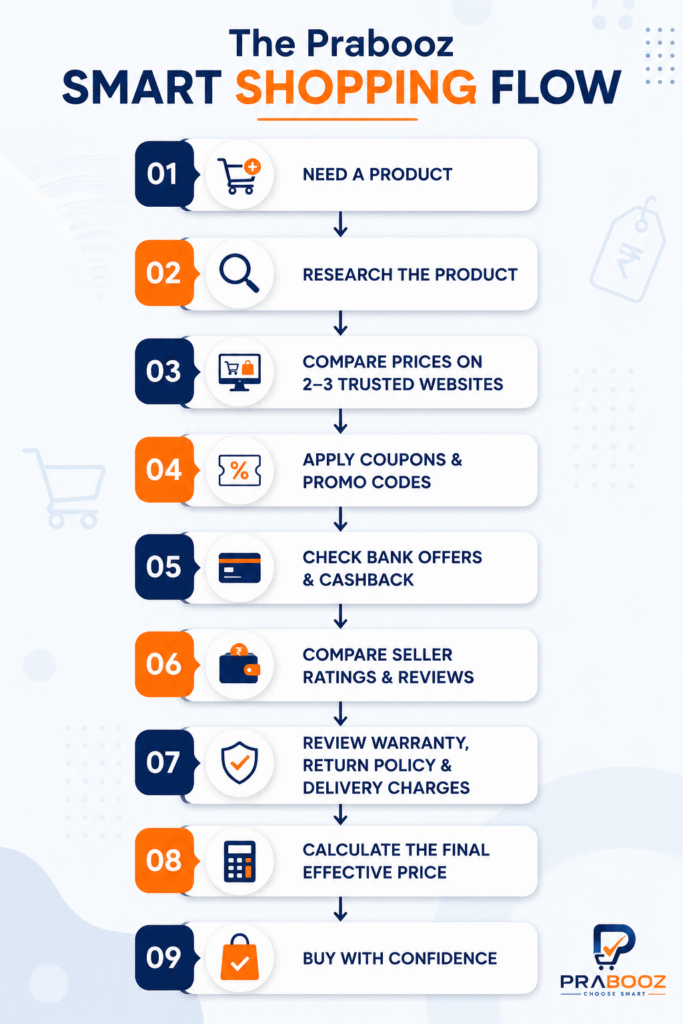
Smart shopping is not about finding the cheapest product—it’s about following a structured process to identify the best overall value. By comparing prices, checking offers, verifying seller credibility, and evaluating additional costs before purchasing, you can avoid common mistakes and make more informed buying decisions. The simple step-by-step process below will help you shop smarter and save more every time.
Why Following a Process Matters
Many people compare only the price shown on the product page and make a purchase immediately. Unfortunately, this simple approach often causes shoppers to miss better deals available elsewhere.
Smart shopping isn’t about checking one or two prices randomly. It’s about following a simple step-by-step process that helps you compare every important factor before spending your money.
Think of it as a short checklist that professional shoppers naturally follow. It takes only a few minutes, yet it can save hundreds—or even thousands—of rupees on a single purchase.
Whether you’re buying a smartphone, laptop, washing machine, or even everyday household items, following the same process helps you make informed decisions instead of impulse pu
Why This Process Works
Each step eliminates one common mistake that online shoppers make.
Researching the product helps you choose the right model instead of buying based only on advertisements. Comparing multiple websites prevents overpaying. Coupons, bank offers, cashback, and exchange deals reduce your final cost, while checking seller ratings and return policies protects you from poor buying experiences.
Instead of chasing the biggest advertised discount, this process focuses on identifying the best overall value. That’s the difference between an average shopper and a smart shopper.
Over time, following this simple habit becomes second nature. The few extra minutes you spend before clicking “Buy Now” can lead to meaningful savings on almost every online purchase.
💡 PRABOOZ INSIGHT
Smart shoppers don’t simply look for the lowest price—they look for the best overall value. A slightly higher-priced product from a trusted seller with genuine reviews, a good warranty, reliable delivery, and excellent after-sales support is often a smarter investment than choosing the cheapest option. The best purchase is one that delivers quality, reliability, and long-term satisfaction—not just immediate savings.
📌 Did You Know?
Studies and consumer experience consistently show that spending just a few extra minutes comparing prices, offers, and seller details can save hundreds—or even thousands—of rupees over a year, especially for frequent online shoppers.
Why the Same Product Has Different Prices
Have you ever noticed that the same smartphone, laptop, or kitchen appliance is sold at different prices on different websites? At first glance, it may seem confusing. After all, the product is exactly the same. However, online pricing is influenced by many factors, and understanding them can help you become a smarter shopper.
Different Sellers
Most major e-commerce platforms, such as Amazon and Flipkart, are online marketplaces rather than traditional stores. This means that several independent sellers can list the same product on the same website.
For example, one seller may offer a Bluetooth speaker for ₹2,499, while another lists it for ₹2,699. The lower-priced seller may have purchased the product in bulk or may be willing to earn a smaller profit to attract more customers. Meanwhile, the higher-priced seller might include faster delivery or better after-sales service.
This is why it is always worth comparing different sellers before placing an order.
Marketplace Competition
Online retailers constantly compete with one another to attract customers. If one platform reduces the price of a popular product, competing platforms often respond by offering similar or even better deals.
For instance, if Amazon India lowers the price of a smartwatch, Flipkart or another retailer may quickly adjust its price to remain competitive. This healthy competition benefits consumers by keeping prices competitive throughout the year. Instead of assuming one website always offers the best deal, compare prices across multiple trusted platforms
Flash Sales
Flash sales are limited-time promotional events where products are offered at heavily discounted prices for a short period. These sales may last only a few hours or until the available stock is sold out.
Popular events such as Amazon Great Indian Festival, Flipkart Big Billion Days, or special weekend sales often feature flash deals on electronics, fashion, and home appliances. While flash sales can provide genuine savings, shoppers should avoid making impulsive purchases simply because a countdown timer is running. Always compare the final price with other websites before buying.
Regional Pricing
In some cases, online prices can vary depending on the customer’s location. Delivery costs, local taxes, warehouse availability, and regional demand all influence pricing.
For example, a refrigerator may cost slightly less in a city where the seller has a nearby warehouse because transportation costs are lower. Conversely, delivering the same product to a remote location may increase the final price due to higher shipping expenses.
Although regional price differences are not always significant, they can affect the overall amount you pay.
Bank Partnerships
Many online shopping platforms partner with banks to offer exclusive discounts to customers using specific credit or debit cards.
For example:
- 10% Instant Discount with HDFC Bank Credit Cards
- ₹1,500 Off Using an ICICI Bank Card
- Cashback for SBI Credit Card Users
These offers are usually funded jointly by the retailer and the bank as part of promotional campaigns. As a result, two customers purchasing the same product may pay different prices depending on the payment method they use.
Before completing your purchase, always check the available bank offers—you could save hundreds or even thousands of rupees.
Coupons and Promo Codes
Many online stores provide digital coupons or promotional codes that can be applied during checkout. These offers may include percentage discounts, flat-price reductions, or free shipping.
For example:
- SAVE500 – Get ₹500 off on purchases above ₹5,000.
- WELCOME10 – Receive 10% off your first order.
- Free delivery coupon for selected products.
Some coupons are visible on the product page, while others are available through promotional emails or coupon websites. Taking a few moments to search for valid coupons before placing your order can result in additional sav
Limited-Time Discounts
Retailers frequently reduce prices during special occasions such as festive seasons, anniversary celebrations, clearance sales, or new product launches.
For example, a laptop priced at ₹62,000 today might be available for ₹56,000 during a Diwali sale or an Independence Day promotion.
These discounts are designed to increase sales during high-demand periods. However, not every discount represents the lowest possible price. Checking the product’s price history can help you determine whether the offer is genuinely worthwhile.
Key Takeaway
Online prices are constantly changing because retailers compete for customers, sellers follow different pricing strategies, and promotional offers vary throughout the year. By understanding these factors and spending just a few extra minutes comparing prices, you can avoid overpaying and make more informed purchasing decisions.
💡 PRABOOZ INSIGHT
Never judge a deal by the price alone. Compare the final payable amount, including shipping charges, bank discounts, cashback offers, coupons, warranty, and return policy before clicking the “Buy Now” button. This simple habit can save you a surprising amount of money over time.

Why Comparing Prices Can Save Thousands Every Year
Many people think comparing prices saves only a few hundred rupees. However, those small savings add up over an entire year, especially if you shop online regularly.
Here are a few practical examples:
| Product | Price Difference | Possible Savings |
| Mobile Phone | ₹2,000 | ₹2,000 |
| Refrigerator | ₹3,500 | ₹3,500 |
| Laptop | ₹4,000 | ₹4,000 |
| Branded Shoes | ₹800 | ₹800 |
| Monthly Grocery Shopping | ₹300 × 12 months | ₹3,600 |
Total Potential Annual Savings: ₹13,900
These savings can be even higher when you combine bank offers, cashback, coupons, and seasonal discounts. Spending just a few extra minutes comparing prices before making a purchase can help you keep thousands of rupees in your pocket every year.
💡 PRABOOZ INSIGHT
Don’t buy from the first website you visit. Compare prices across trusted platforms and calculate the final payable amount—including shipping charges, discounts, cashback, and bank offers. A few extra minutes of comparison can save thousands of rupees over a year.
What Should You Compare Besides Price?
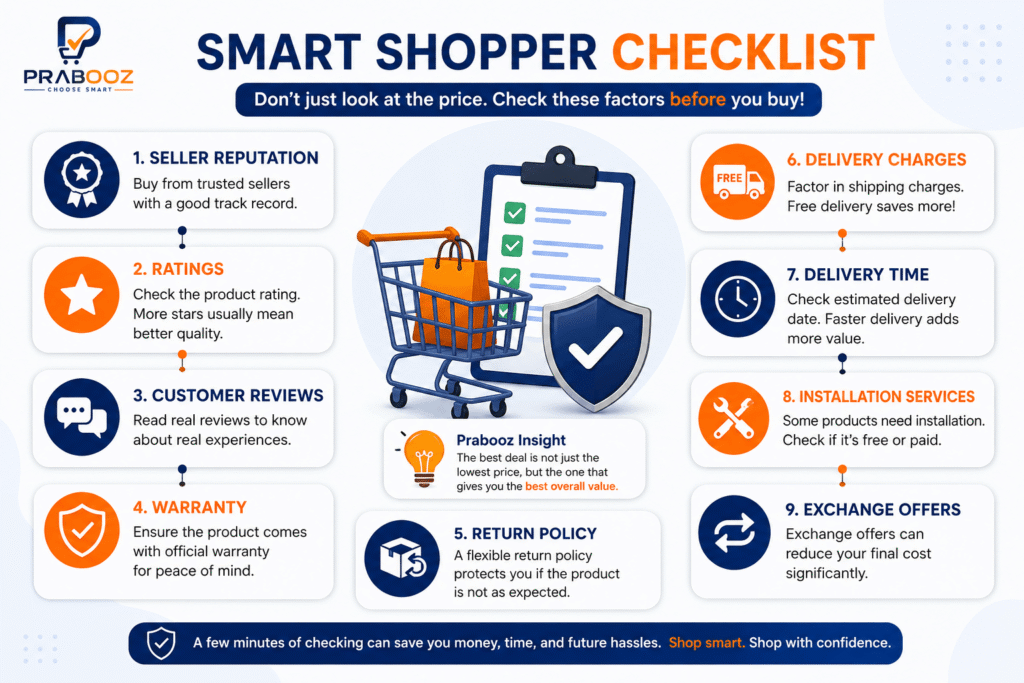
A lower price doesn’t always mean a better deal. Before clicking the “Buy Now” button, compare these important factors to ensure you’re getting the best value for your money.
Seller Reputation
Check who is selling the product. Trusted and highly rated sellers are more likely to deliver genuine products, provide good customer service, and handle returns smoothly.
Ratings
Look at the product’s overall star rating. A product with 4 stars or above and a large number of ratings is generally a safer choice than one with only a few reviews.
Customer Reviews
Read recent customer reviews to understand the product’s real-world performance. Reviews often reveal information about quality, durability, packaging, and any common issues that may not be mentioned in the product description.
Warranty
Always check the warranty period, especially for electronics and home appliances. A longer manufacturer’s warranty provides added peace of mind and can save you money on future repairs.
Return Policy
Even good products may not meet your expectations. Make sure the item has a clear return or replacement policy in case it arrives damaged, defective, or doesn’t match the description.
Delivery Charges
A product with a lower price may become more expensive after adding shipping fees. Compare the final payable amount, including delivery charges, before making your decision.
Delivery Time
If you need the product urgently, compare the estimated delivery dates. Sometimes paying a little more for faster delivery may be worthwhile.
Installation Services
For products like air conditioners, washing machines, televisions, or water purifiers, check whether installation is included or if additional charges apply. Free installation can significantly reduce the overall cost.
Exchange Offers
If you’re replacing an old device, compare exchange offers across different platforms. The exchange value can vary significantly, helping you save even more on your purchase.
💡 PRABOOZ INSIGHT
Many shoppers focus only on finding the lowest price, but the smartest buyers compare the total value of a purchase. A trusted seller, genuine customer reviews, a good warranty, easy returns, and reliable after-sales support can be worth paying a little extra for. Saving a few hundred rupees today is not worthwhile if the product causes problems tomorrow.

Best Ways to Compare Prices Online
Finding the best deal isn’t just about looking at the lowest price. To compare prices before buying online effectively, smart shoppers evaluate the total value before making a purchase.
Visit Multiple Websites
Don’t rely on a single shopping platform. Compare prices on trusted websites like Amazon, Flipkart, Croma, Reliance Digital, or the brand’s official store. The same product can have surprisingly different prices.
Compare the Final Payable Price
The displayed price isn’t always the amount you’ll pay. Check the final bill, including shipping charges, taxes, installation fees, and any additional costs before placing your order.
Check Bank Offers
Many online stores offer instant discounts on selected credit or debit cards. A bank offer can reduce the price significantly, especially on electronics and home appliances.
Look for Cashback Offers
Cashback from payment apps, wallets, or credit cards can lower the effective cost of your purchase. Even if the price is the same, cashback helps you save more.
Use Reward Points
If you have reward points from your credit card or shopping account, redeem them while making a purchase. It’s an easy way to reduce your final payment.
Apply Coupons
Before checking out, look for available coupon codes. A valid coupon can provide instant discounts, free delivery, or other special benefits with just a few clicks.
Shop During Seasonal Sales
Major sales like Amazon Great Indian Festival, Flipkart Big Billion Days, Diwali, Independence Day, and year-end sales often offer the biggest discounts. If your purchase isn’t urgent, waiting for these events can lead to substantial savings.
Want more ways to reduce your shopping expenses? Read our complete guide on How to Save Money on Online Shopping in India for additional money-saving tips.
💡 PRABOOZ INSIGHT
The best online deal isn’t always found on a single website. Smart shoppers compare multiple trusted platforms, calculate the final payable amount after applying bank offers, cashback, coupons, and shipping charges, and then choose the option that delivers the highest overall value. A systematic comparison takes only a few minutes but can lead to significant savings over time..
Useful Price Comparison Tools
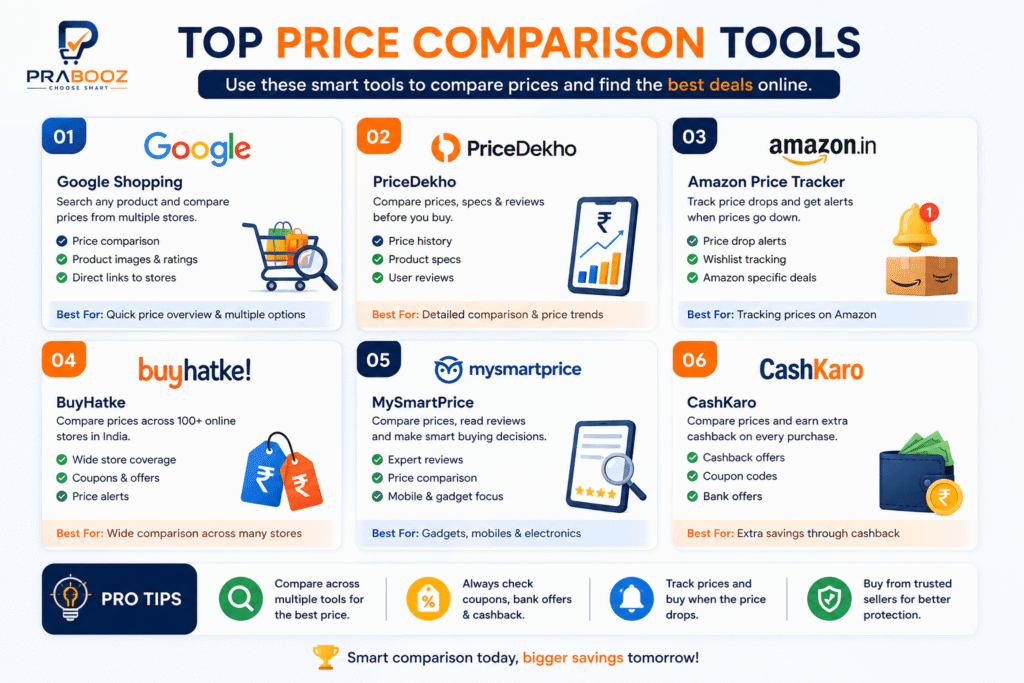
Comparing prices manually across several websites can take time, especially when you’re shopping for expensive products. Fortunately, several free tools can help you compare prices, track price history, and identify genuine discounts. While no single tool is perfect, using one or two of them can help you make smarter purchasing decisions.
Google Shopping
Google Shopping is one of the easiest ways to compare prices from multiple online retailers. Simply search for a product, and it displays listings from different sellers along with prices, ratings, delivery information, and product images. It’s an excellent starting point for checking whether you’re getting a competitive price before making a purchase.
Many modern shopping platforms also use Artificial Intelligence to recommend products and personalize search results. Learn more in our guide, What Is Artificial Intelligence (AI)?
BuyHatke
BuyHatke is a popular browser extension designed for Indian online shoppers. It compares prices across major e-commerce websites and also highlights available coupon codes and price drops. If you shop online regularly, it can save both time and money by bringing useful information together in one place.
Price History Tools
A product advertised as “50% OFF” isn’t always a real bargain. Price history tools show how a product’s price has changed over weeks or months, helping you determine whether the current offer is genuinely attractive or simply part of a marketing strategy. This information can help you decide whether to buy now or wait for a better deal.
AI assistants such as ChatGPT can also help you compare products, summarize reviews, and evaluate buying options before making a purchase. Learn more in What Is ChatGPT?
Keepa (For Amazon)
Keepa is one of the most trusted price-tracking tools for Amazon products. It provides detailed price history charts, allowing you to see how a product’s price has changed over time. This is particularly useful when buying high-value items such as smartphones, laptops, televisions, or home appliances, where waiting for the right time could save thousands of rupees.
💡 PRABOOZ INSIGHT
These tools should support your buying decision—not replace your judgment. Always compare the final payable price, seller reputation, warranty, delivery charges, and return policy before placing your order. The best deal is the one that offers the best overall value, not simply the lowest price.\
Products You Should Always Compare Before Buying
Not every purchase requires extensive research. Spending 30 minutes comparing the price of a ₹100 item may not be worthwhile. However, for expensive or frequently purchased products, comparing prices can lead to significant savings over time.
Here are the product categories where price comparison is most valuable:
Smartphones and Laptops
Electronics often have the biggest price differences across retailers. Before buying, compare prices, bank offers, exchange values, cashback, and warranty benefits. A few minutes of research could save you thousands of rupees.
Televisions and Home Appliances
Products like televisions, refrigerators, washing machines, and air conditioners are frequently included in festive sales. Different retailers may also offer free installation, extended warranties, or exchange bonuses, making the final deal much more attractive.
Furniture
Furniture prices can vary significantly depending on the seller, material quality, and delivery charges. Compare dimensions, customer reviews, assembly services, and return policies before placing your order.
Shoes and Fashion
Branded footwear and clothing are often heavily discounted during end-of-season clearance sales. Comparing prices across different websites can help you find the same product at a much lower price.
Grocery and Daily Essentials
Although the savings on individual items may seem small, comparing prices on groceries, household products, and personal care items can reduce your monthly shopping bill. Over a year, these savings can add up considerably.
Health Supplements
Health supplements are available from many online stores at different prices. Always compare prices, check expiry dates, verify the seller’s authenticity, and ensure you’re purchasing genuine products from trusted sources.
💡 PRABOOZ INSIGHT
Focus your time where it matters most. The higher the value of a product—or the more frequently you purchase it—the greater the benefit of comparing prices before making a buying decision. Prioritizing price comparison for high-value and regularly purchased items can help you achieve substantial long-term savings.

How Long Should You Wait Before Buying?
The best time to buy depends on how urgently you need the product. While waiting for a sale can help you save money, delaying every purchase isn’t always the smartest choice. Understanding when to buy and when to wait can help you strike the perfect balance between saving money and meeting your immediate needs.
Buy Now if It’s Urgent
If you need a product immediately—for work, study, or daily use—and the current price is reasonable, there’s little benefit in waiting weeks or months. Compare prices across a few trusted websites, apply available offers, and buy with confidence.
Wait if Your Purchase Isn’t Urgent
If the product isn’t needed right away, waiting for major shopping events like Diwali, Amazon Great Indian Festival, or Flipkart Big Billion Days can often lead to better discounts, cashback, exchange offers, and bank promotions.
Best Time for Different Products
Home Appliances: Refrigerators, washing machines, air conditioners, and televisions usually receive attractive offers during festive sales, often with bank discounts, cashback, free installation, or exchange bonuses.
Electronics: Prices often drop after a newer model is launched, making previous-generation models more affordable.
Fashion: Buy clothing and footwear during end-of-season clearance sales, when retailers offer deep discounts to clear inventory.
Here are some practical situations where waiting can help:
During Major Sale Events
Popular shopping events such as Amazon Great Indian Festival, Flipkart Big Billion Days, Diwali Sales, Independence Day Sales, and Republic Day offers often provide some of the year’s biggest discounts. If your purchase isn’t urgent, waiting for these events can reduce the final price considerably.
When Prices Have Recently Increased
Sometimes prices rise temporarily because of high demand or limited stock. Instead of buying immediately, monitor the product for a few days. Price history tools can help you determine whether the increase is temporary.
Before New Product Launches
When manufacturers release a new smartphone, laptop, or television model, prices of the previous generation usually fall. If you don’t need the latest features, purchasing the earlier model can offer excellent value for money.
During End-of-Season Sales
Fashion, footwear, and lifestyle products often receive deep discounts during end-of-season clearance sales. Waiting for these sales can help you purchase premium brands at much lower prices.
💡 PRABOOZ INSIGHT
Patience is often rewarded in online shopping. Unless your purchase is urgent, waiting for the right sale, monitoring price history, and tracking seasonal offers can help you secure the best possible deal while avoiding unnecessary spending.The best deal isn’t always available today—but waiting isn’t always the smartest decision either. If your purchase is urgent and the current price offers good overall value, buying now is perfectly reasonable. When you have flexibility, however, planning your purchase around major sales and seasonal discounts can lead to significant savings.
✅ Key Takeaways
Buy immediately when the product is essential and reasonably priced. If it’s not urgent, wait for major sale events or price drops to maximize your savings without compromising on value.
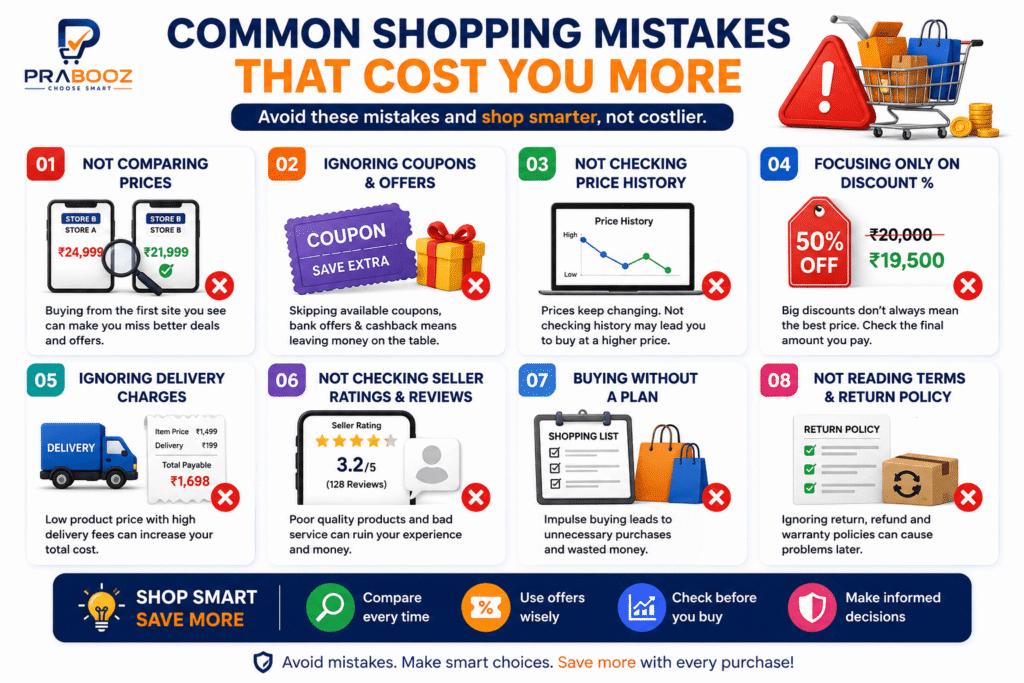
Beware of These Common Shopping Mistakes
A great deal isn’t always as good as it looks. Many shoppers end up spending more than necessary by overlooking a few important details. Avoiding these common mistakes can help you make smarter purchasing decisions, reduce unnecessary spending, and ensure you get the best value for your money.
Buying During Fake Discounts
Some products display huge discounts like “70% OFF”, but the original price may have been artificially inflated. Instead of focusing on the discount percentage, compare the current price with the product’s price history to determine whether the offer is genuinely worthwhile.
Ignoring Shipping Costs
A product may appear cheaper than its competitors, but high delivery charges can increase the final bill. Always compare the total payable amount, including shipping fees and any additional charges, before making a purchase.
Missing Coupon Codes
Many shoppers complete their purchase without checking for available coupon codes. A simple coupon can provide instant discounts, free delivery, or additional cashback, helping you save more with minimal effort.
Buying from Unknown Sellers
A low price isn’t worth the risk if the seller has poor ratings or negative reviews. Before ordering, check the seller’s reputation, customer feedback, warranty, and return policy to reduce the chances of receiving counterfeit or defective products.
Falling for Countdown Timers
Messages like “Only 5 minutes left!” or “Hurry! Limited Stock!” are often designed to create urgency. Don’t let these tactics pressure you into making impulsive purchases. Take a few minutes to compare prices and evaluate the offer carefully.
Ignoring the Return Policy
Even genuine products may arrive damaged, defective, or different from what you expected. Always read the return and replacement policy before buying, especially for expensive electronics, clothing, and household items.
💡 PRABOOZ INSIGHT
The biggest shopping mistake isn’t paying a little more—it’s making a rushed decision without checking the complete details. Spending just a few extra minutes reviewing prices, seller ratings, return policies, and available offers can save you money, prevent disappointment, and help you buy with confidence.
✅ Key Takeaways
Smart shopping isn’t about buying the cheapest product—it’s about avoiding costly mistakes. Verify the seller, compare the final price, apply coupons, review the return policy, and avoid impulse purchases before clicking “Buy Now.”
Best Time to Buy Online
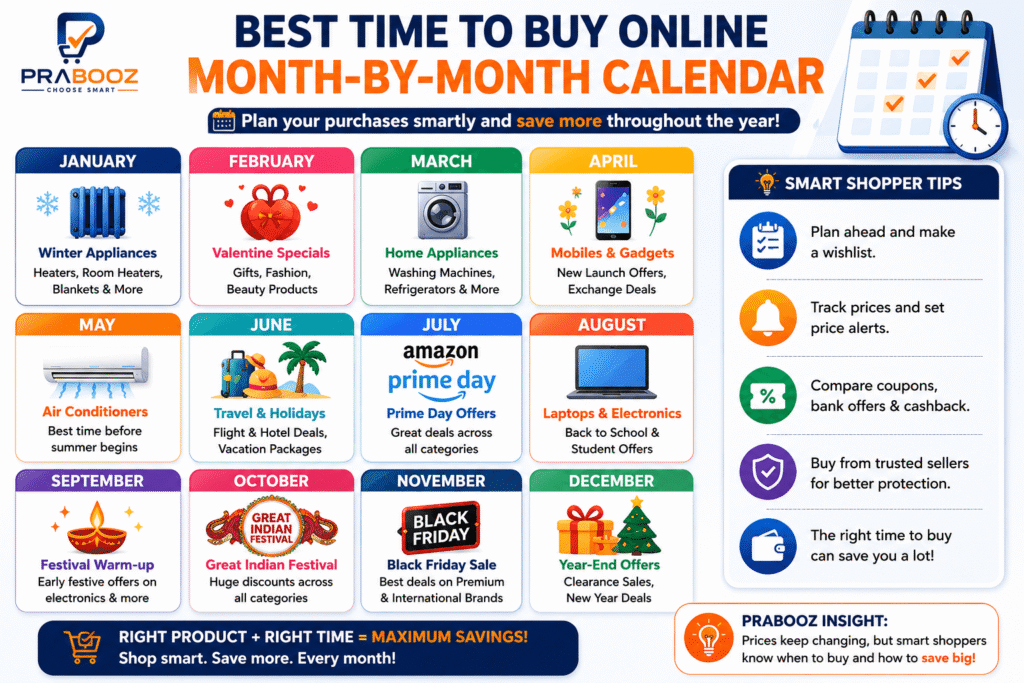
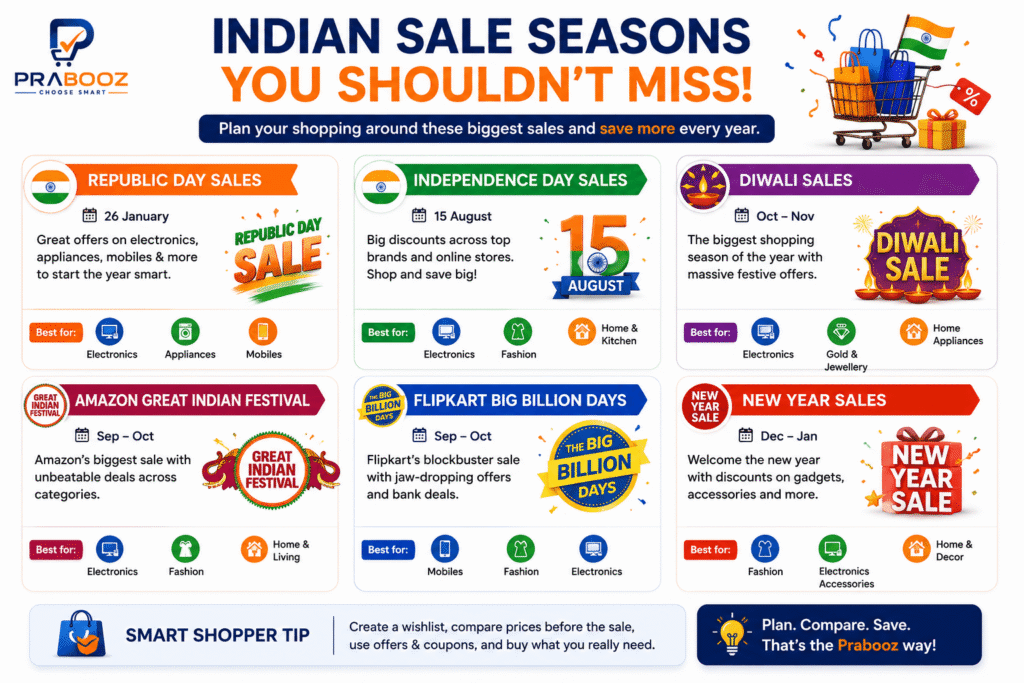
Timing can make a big difference in how much you pay. Many online retailers offer their biggest discounts during special sales and festive seasons. If your purchase isn’t urgent, waiting for the right time can help you save significantly.
Festival Sales
Major festivals often bring attractive discounts on electronics, fashion, home appliances, and daily essentials. Retailers also introduce special bank offers, cashback deals, and exchange bonuses during these periods.
End-of-Season Clearance
Fashion and lifestyle brands frequently clear old inventory before launching new collections. This is one of the best times to buy clothing, footwear, and accessories at heavily reduced prices.
Republic Day Sales
Around 26 January, many online stores launch Republic Day sales with discounts on smartphones, electronics, home appliances, and furniture. These offers are often include bank discounts for additional savings.
Independence Day Sales
During August, Independence Day promotions feature attractive deals across multiple product categories. This is an excellent opportunity to purchase gadgets, home essentials, and personal electronics at competitive prices.
Diwali Sales
Diwali is India’s biggest shopping season. Most leading e-commerce platforms and brands offer substantial discounts, cashback offers, no-cost EMI options, and exchange deals, making it one of the best times for major purchases.
Amazon Great Indian Festival
Amazon’s Great Indian Festival is one of the largest shopping events of the year. It features significant discounts on electronics, home appliances, fashion, groceries, and more, along with exclusive bank offers and lightning deals.
Flipkart Big Billion Days
Flipkart’s Big Billion Days is another major annual sale known for aggressive pricing on smartphones, laptops, televisions, and household products. Comparing prices during this event can lead to substantial savings.
New Year Sales
Many retailers begin the year with clearance and promotional sales to reduce old stock. These sales can offer excellent value on electronics, furniture, fitness equipment, and seasonal products.
💡 PRABOOZ INSIGHT
Shopping during a major sale doesn’t automatically guarantee the lowest price. The smartest buyers compare prices across multiple websites, review price history, and combine bank offers, coupons, cashback, and exchange deals to maximize their overall savings.
✅ Key Takeaways
Plan your purchases around major sale events whenever possible, but always compare the final payable price across different platforms before making your decision. Timing and comparison together deliver the best value.
Real-Life Example: Comparing Smartphone Prices
Let’s assume you’re planning to buy a smartphone with an MRP of around ₹30,000. At first glance, one website may appear cheaper than the others. However, after considering coupons, bank offers, cashback, and exchange bonuses, the final cost can be very different.
Example Comparison Table
| Store | Listed Price | Bank Offer | Cashback | Exchange Bonus | Final Effective Price |
|---|---|---|---|---|---|
| Amazon | ₹29,999 | ₹2,000 | ₹500 | ₹2,000 | ₹25,499 |
| Flipkart | ₹29,499 | ₹1,500 | ₹1,000 | ₹1,500 | ₹25,499 |
| Brand Website | ₹30,499 | ₹3,000 | — | ₹1,000 | ₹26,499 |
Note: Prices are for illustration only. Actual prices, offers, and discounts may vary depending on the retailer, seller, location, and promotional period.
💡 PRABOOZ INSIGHT
The lowest listed price doesn’t always result in the lowest final cost. Smart shoppers compare the effective price after including bank discounts, cashback, exchange offers, shipping charges, and other applicable benefits before making a purchase.
✅ Key Takeaways
Never judge a deal by its displayed price alone. Compare the final effective price after applying all available offers to identify the best overall value.
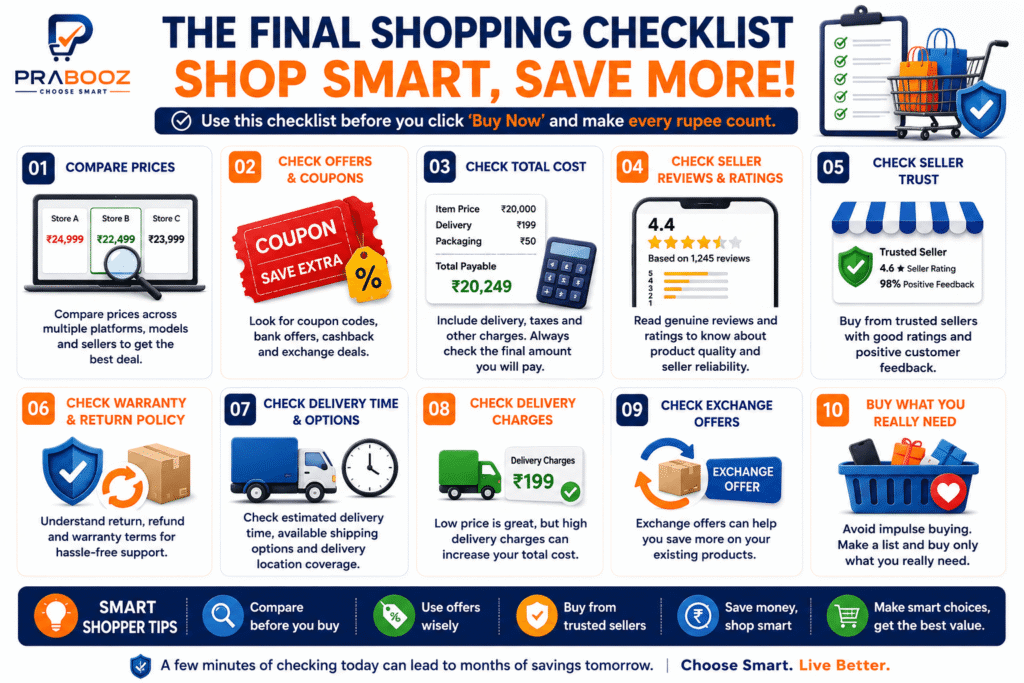
Quick Checklist Before Every Purchase
Before clicking the “Buy Now” button, take one final minute to review this simple checklist. Following these steps can help you avoid common mistakes, save money, and ensure you’re getting the best overall value.
✅ Smart Shopping Checklist
- ✅ Compare prices on 2–3 trusted websites.
- ✅ Check bank offers, cashback, and exchange deals.
- ✅ Apply available coupons or promo codes.
- ✅ Compare the final payable price, including shipping charges.
- ✅ Review the seller’s ratings and customer reviews.
- ✅ Verify the warranty, return, and replacement policy.
- ✅ Check the product’s price history if available.
- ✅ Buy only if you’re confident you’re getting the best overall value, not just the lowest price.
Looking for more buying guides? Visit our Smart Deals section for expert tips, product comparisons, and money-saving advice.
Frequently Asked Questions (FAQs)
1. Is Google Shopping reliable?
Yes. Google Shopping is a useful tool for comparing prices from different online retailers. However, always verify the seller’s reputation, ratings, warranty, and return policy before making a purchase.
2. Which website usually has the lowest prices?
There is no single website that always offers the lowest price. Prices change frequently on platforms like Amazon, Flipkart, and brand websites. Comparing multiple trusted sellers is the best way to find the best deal.
3. Are cashback offers worth it?
Yes, if used wisely. Cashback reduces your effective purchase cost, but it shouldn’t be the only reason to buy a product. Always compare the final price after cashback with other available offers.
4. Should I always wait for seasonal sales?
Not necessarily. Seasonal sales often provide excellent discounts, but some products are available at competitive prices throughout the year. If you need an item urgently and the current price is reasonable, waiting may not always be beneficial.
5. How can I check a product’s price history?
You can use tools like Keepa for Amazon products or other price history websites and browser extensions. These tools help you determine whether the current discount is genuine or simply a temporary marketing strategy.
6. Is the lowest-priced product always the best choice?
No. Consider factors such as seller reputation, customer reviews, warranty, return policy, and delivery charges. A slightly higher-priced product from a trusted seller often offers better value.
7. Do bank offers and coupons work together?
In many cases, yes. Some online stores allow you to combine coupons with eligible bank discounts and cashback offers, resulting in greater savings. Always read the offer terms before checkout.
8. How many websites should I compare before buying?
As a general rule, compare prices on at least two or three trusted websites. This helps you identify the best overall value without spending too much time searching.
9. Is it safe to buy from unknown sellers offering huge discounts?
Be cautious. Extremely low prices from unknown sellers may involve counterfeit products, delayed deliveries, or poor customer service. Check seller ratings and reviews before placing your order.
10. What is the most important tip for saving money while shopping online?
Compare the final effective price, not just the listed price. Include shipping charges, coupons, bank offers, cashback, exchange value, warranty, and return policy before making your decision. That’s how smart shoppers get the best value for their money.
Final Thoughts
Saving money isn’t about buying the cheapest product—it’s about making informed decisions. When you compare prices before buying online, you avoid overpaying and get the best overall value.
Whether you’re purchasing a smartphone, home appliance, or everyday essentials, smart price comparison can lead to significant savings over time. Make it a habit before every online purchase, and you’ll soon discover that smart shopping isn’t about luck—it’s about making the right choices.
Explore more practical buying guides in our Smart Shopping section to become a more confident and informed online shopper.
At Prabooz, we believe every rupee matters. Before you click “Buy Now,” take a moment to compare prices, verify offers, and choose the option that delivers the best overall value. Small habits like these can make a big difference to your long-term savings.